Skip to content

BIM for stadiums and large public venues

Stadiums bring architecture, engineering, construction, public safety, and operational requirements into one high-pressure project environment. Solibri helps project teams validate model quality, coordinate complex systems, and identify issues before they become construction risk.

Solibri Stadium Cardiff

Build stadiums with model quality you can trust

Stadiums are not conventional buildings. They combine large-span structures, complex MEP systems, public circulation, hospitality areas, broadcast facilities, security zones, retail spaces, back-of-house operations, and long-term asset management requirements.

Every discipline depends on the same digital foundation. If the model is incomplete, inconsistent, or poorly coordinated, the risk does not stay inside the model. It moves into procurement, installation, sequencing, compliance, handover, and future operation.

Solibri gives stadium project teams a structured way to check BIM models before decisions become expensive to correct. Through rule-based model checking, clash detection, data validation, accessibility review, and compliance-focused workflows, teams can build confidence in the model before work reaches the site.
Stadium projects leave little room for coordination errors

Large venues require thousands of project decisions to align across architecture, structure, MEP, fire safety, accessibility, crowd movement, and operational planning. A late coordination issue in a stadium can affect more than one discipline. It can disrupt installation routes, delay commissioning, compromise documentation, or create knock-on effects across seating bowls, concourses, plant rooms, service corridors, and public areas.

Traditional visual review is not enough for this level of complexity. Stadium teams need repeatable QA/QC workflows that can check models consistently across disciplines and design stages. They need to understand where issues occur, who owns them, how severe they are, and whether they have been resolved in later model versions.

Solibri acts as an independent quality checkpoint between design intent and construction reality. It allows teams to validate the model against defined rules, project requirements, and coordination logic, giving BIM managers, VDC teams, contractors, designers, and owners a clearer basis for decision-making.

Why BIM validation matters in stadium construction

BIM for stadiums is not only about visualization. The model must support coordination, construction readiness, safety reviews, compliance workflows, and handover confidence.

Solibri helps teams move from fragmented model review to structured BIM quality assurance. Instead of relying only on manual checks, teams can apply consistent rules across models, identify risks earlier, and document the outcomes of their validation process.

What Should a Stadium Model Support?

  • Coordination between architecture, structural, MEP, fire safety, and specialist systems
  • Clash detection across high-density service zones
  • Validation of circulation routes, accessible areas, doors, ramps, stairs, and clearances
  • Fire stopping and compartmentation review
  • Issue management across design and construction teams
  • Data validation for handover and long-term asset operation
  • OpenBIM and IFC model exchange across project organizations
  • Revit-based workflows in markets where RVT is central to project delivery

Coordinate complex venue systems before they reach the site

Stadiums concentrate a wide range of systems into areas where space is limited and installation sequencing is critical. MEP systems, structural elements, vertical circulation, back-of-house routes, concession areas, hospitality spaces, and broadcast infrastructure all compete for space.

In these environments, a simple clash list is not enough. Teams need to separate critical construction issues from acceptable conditions, prioritize by discipline or location, and manage coordination across multiple model updates.

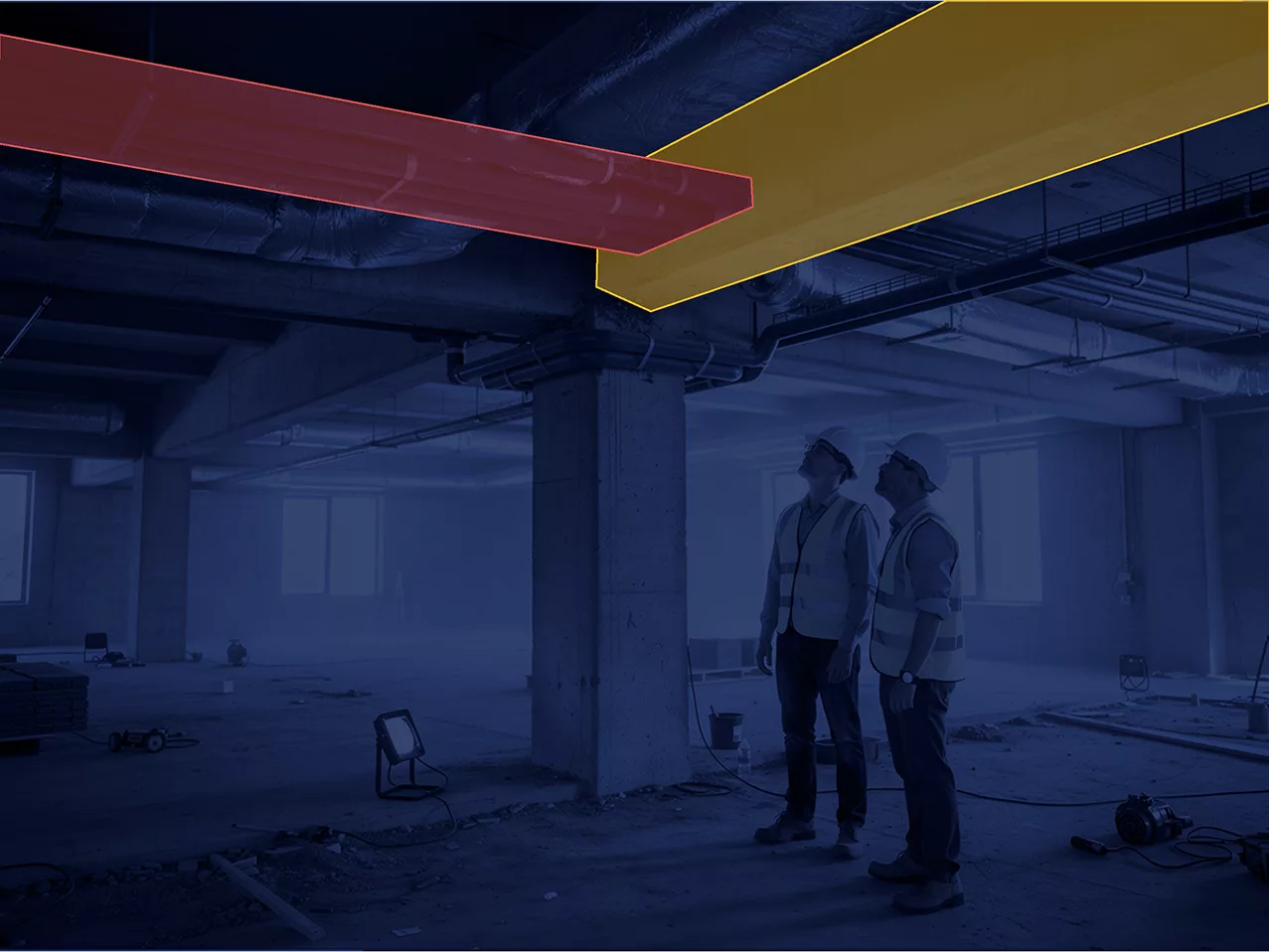
Solibri supports rule-based clash detection that can identify hard clashes, soft clashes, clearance issues, and tolerance-based coordination problems. This allows teams to check model conflicts in a more controlled way and reduce the noise that often slows coordination meetings, so issues can be grouped, assigned, reviewed, and verified before they affect procurement, prefabrication, or installation.

Solibri clash detection blue

Validate accessibility, circulation, and public safety requirements

A stadium must move large numbers of people safely, efficiently, and accessibly. Entrances, exits, concourses, seating access, ramps, stairs, corridors, doors, sanitary facilities, hospitality areas, and service routes all need to work together.

Accessibility and circulation requirements are often affected by design changes. A shifted wall, a revised door position, an added fixture, or a coordination change around MEP systems can alter available clearance or accessible movement through the venue.

Solibri supports rule-based model checking workflows that allow teams to review accessibility-related design information directly within BIM models. Project teams can check accessible routes, clearance spaces, door maneuvering areas, ramp geometry, stair requirements, and other model-based conditions according to project rules and local requirements.

For stadiums, this helps teams review public-facing areas with more consistency and gives owners, designers, and contractors clearer documentation for accessibility and permitting discussions.

Strengthen fire safety and fire stopping workflows

Fire safety in stadiums requires precision across both design and construction. Public venues depend on fire compartmentation, active and passive fire protection systems, evacuation logic, and accurate documentation that can stand up to review.

Service penetrations are a critical example. Pipes, ducts, cables, and other services often pass through fire-rated walls and floors. If these penetrations are not identified and validated correctly, the fire rating of the compartmentation can be compromised.

Validating 15,000+ penetration seals at Hill Dickinson Stadium

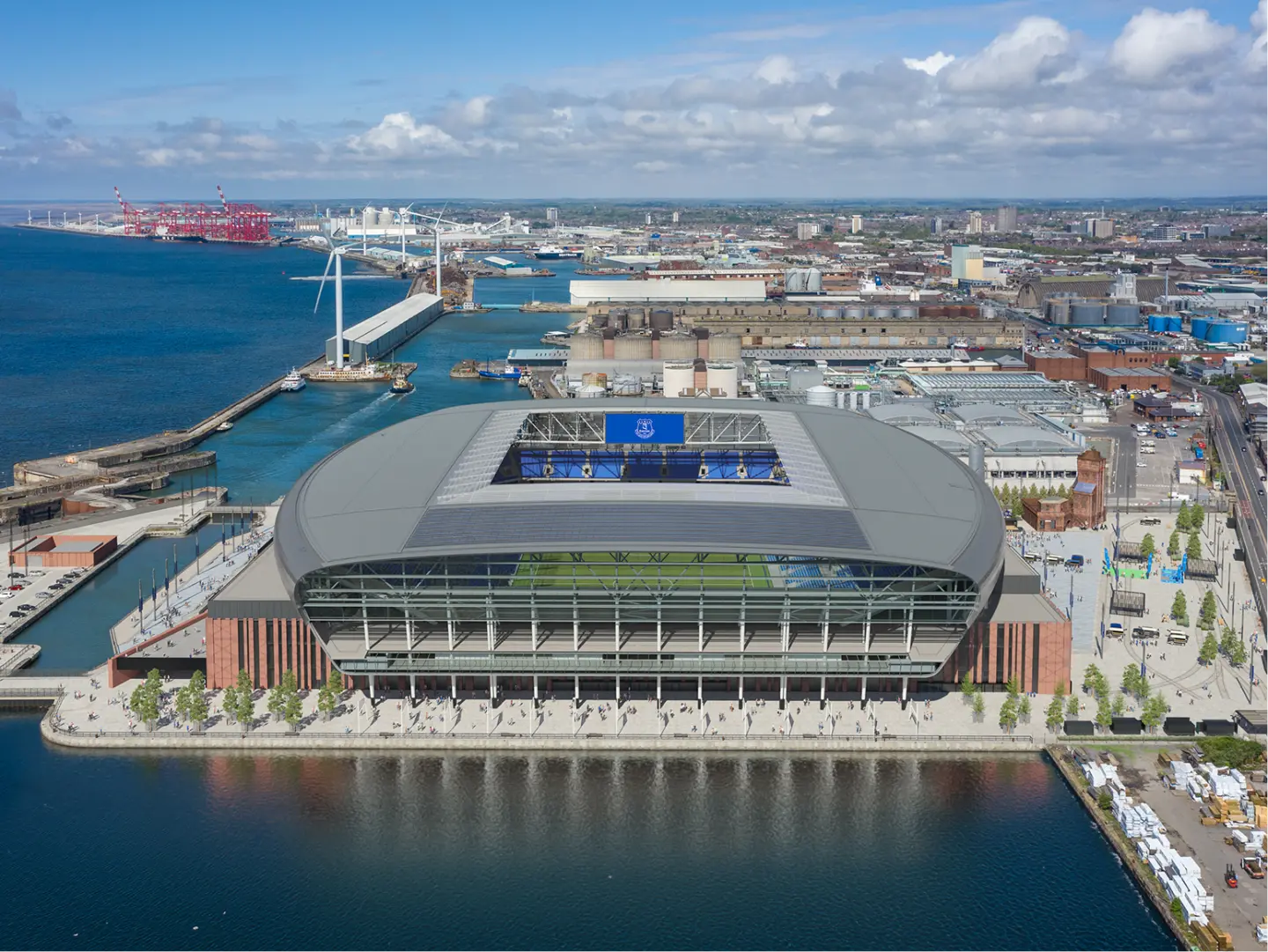
Solibri has been used in stadium fire stopping workflows to support a more complete model-based validation process. On Hill Dickinson Stadium in Liverpool (Everton FC’s New Stadium project), Solibri, Laing O’Rourke, and BDP collaborated on a fire safety design process that automatically validated over 15,000 penetration seals and enabled 100% validation where previous practice could validate approximately 10%.

For stadium projects, this demonstrates how model checking can move beyond general coordination and support safety-critical workflows that require traceability, accountability, and structured evidence.

Everton Stadium View 05 Drone 2020 Issue 02 1 3

Improve handover confidence for long-term venue operations

A stadium does not stop being complex when construction ends. Owners and operators need reliable asset information for maintenance, events, renovations, safety reviews, and future upgrades.

If model data is inconsistent at handover, the operational team inherits uncertainty. Missing classifications, inconsistent naming, incomplete object data, or poor issue traceability can reduce confidence in the model as a long-term information asset.

Solibri supports data validation and model quality workflows that help teams check whether model information meets project requirements before handover. This is especially relevant for large public venues where asset performance, maintenance access, safety documentation, and future renovation planning depend on reliable building data.

For owners and operators, stronger model quality supports better lifecycle decisions after the stadium opens.

Renovation Refitting Image 1 1

Solibri product fit for stadium and arena projects

Solibri Starter

Relevant as a complementary product for project team members who need reliable model access and collaboration tools, without owning formal validation workflows. Use Starter to view models, share findings, and keep contractors, installers, and stakeholders aligned, while rule-based checking and governance are handled in Solibri Advanced and Solibri Premium.

Solibri Essential

Relevant for smaller venue projects, early BIM maturity teams, or project-based workflows with limited governance requirements. It can support teams that need a more structured approach to model checking without a broader standardization program.

Solibri Advanced

Recommended as the primary fit for stadium project teams with formal BIM ownership, multidisciplinary coordination, and repeatable QA/QC requirements. Solibri Advanced is relevant where teams need rule-based model checking, clash detection, data validation, issue management, and structured coordination across project stages.

Solibri Premium

Relevant for owners, contractors, and design organizations managing multiple venues, large public project portfolios, or high-compliance programs where governance, standardization, and executive risk control are central.

Solibri Security+

Relevant only when stadium or public venue work is connected to secure, regulated, government, defense, or critical infrastructure environments where controlled or air-gapped model validation is required.

Proven on complex venue projects

Solibri is active in over 100 countries and used across complex building, infrastructure, and digital permitting environments. Its value is strongest where model quality directly affects cost, compliance, safety, coordination, and long-term asset confidence.

The Everton FC New Stadium fire stopping workflow shows how model validation can address a highly specific, safety-critical stadium challenge. By supporting automated validation of service penetrations through fire-rated walls and floors, Solibri helped the project team create a more complete validation process and improve the reliability of fire safety documentation.

For stadiums, this is the direction digital construction must move toward: not just better models, but better checked models.

Move from model coordination to construction confidence

Stadium teams need more than isolated model review. They need a structured way to validate coordination, identify risk, document decisions, and keep quality visible across the project lifecycle.

Solibri helps project teams check stadium models before errors reach the site, before compliance gaps delay approvals, and before handover data becomes difficult to trust.