Skip to content
BIM Coordination

BIM coordination and federated model validation

BIM coordination brings multidisciplinary models together and ensures they are coordinated, validated, and ready for construction. Structured model validation and clash detection reduce coordination risk and improve project delivery certainty.

Solibri bim hero

BIM coordination in the project workflow

BIM coordination is the stage where discipline models are combined into federated project models and reviewed together. Architects, structural engineers, MEP designers, contractors, and BIM managers use this stage to verify that systems fit together, installation space is available, and model information is consistent across disciplines.

Without structured coordination workflows, projects often experience late design changes, installation conflicts, missing information, and rework during construction. Many of these issues are not visible in individual discipline models and only appear when models are combined into federated models.

Solibri supports BIM coordination by enabling structured federated model review, clash detection, model validation, and coordination issue management in one environment. This helps teams detect issues earlier, improve coordination meetings, and move projects into construction with more reliable models.

Multidisciplinary model coordination and federated model review

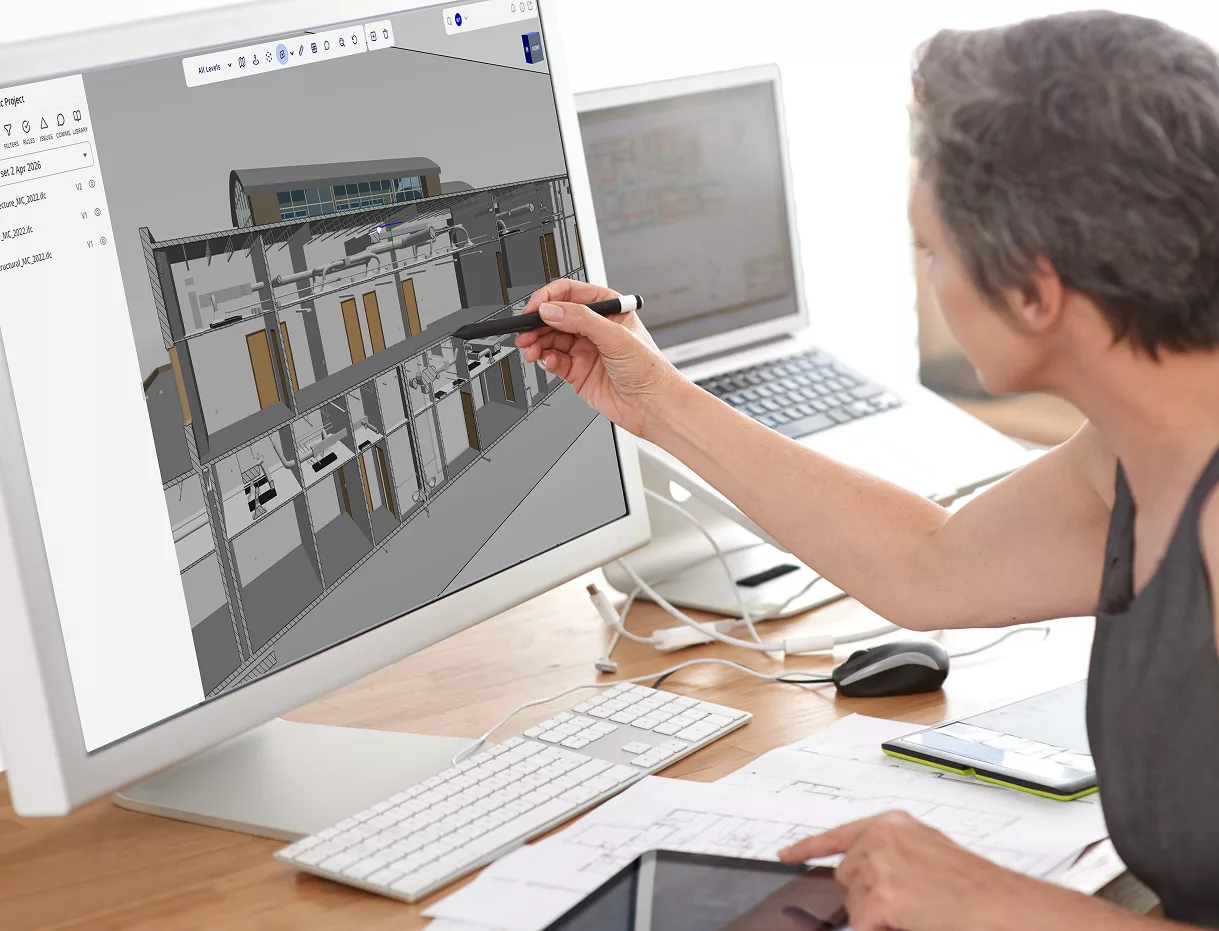
BIM coordination starts with federated model review. Discipline models are combined into a single coordinated model so teams can review spatial coordination, system interfaces, installation space, and information completeness across disciplines.

Many coordination risks only become visible once models are reviewed together. Clearance issues, system conflicts, missing openings, incorrect positioning, and inconsistent model information often only appear when models are combined and reviewed in context.

Solibri supports federated model review through structured model checking across multiple discipline models. Teams can review federated models, validate coordination readiness, and identify where deeper validation or clash detection is required. This improves coordination workflows and ensures decisions are based on reliable model information.

BIM Coordination Page Image 1 2

Clash detection and coordination issue management

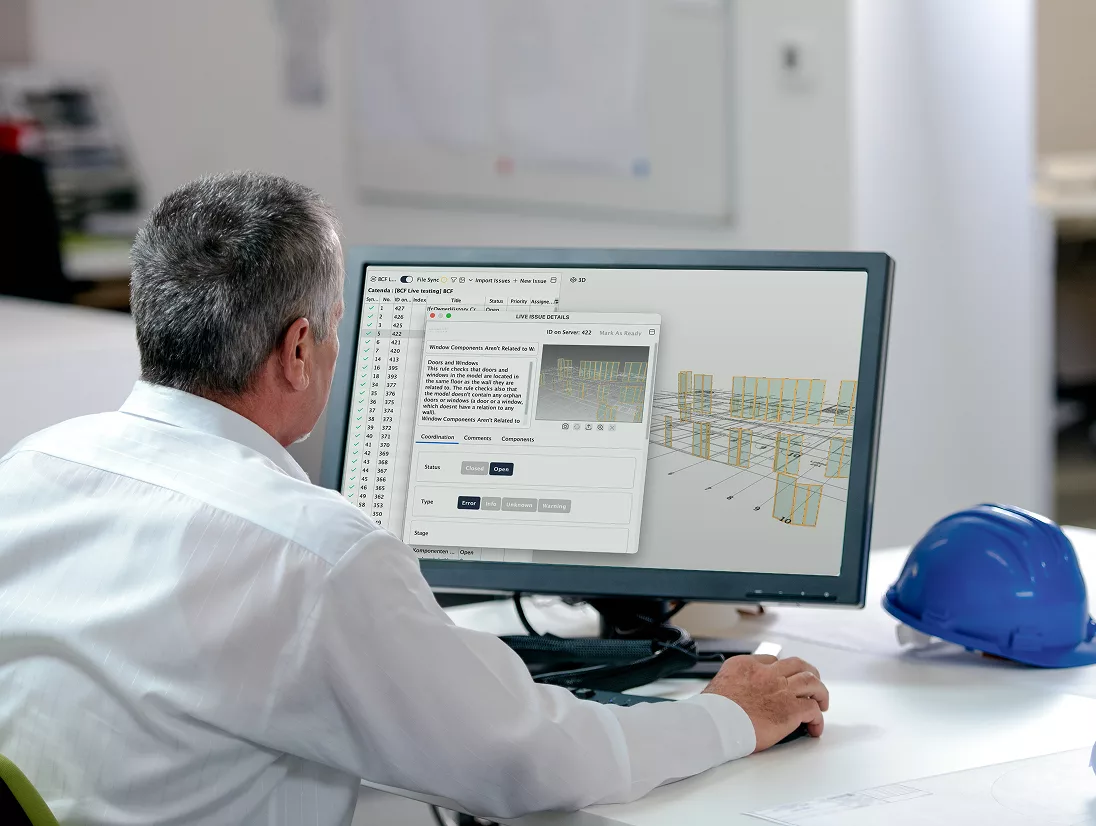
Clash detection is one of the most recognized parts of BIM coordination because it turns federated model review into actionable issue identification. Once discipline models are combined, teams need to detect spatial conflicts, understand their severity, and decide which issues require design changes before construction begins.

Effective clash detection is not only about finding intersections. Teams must classify clashes, prioritize critical issues, group related problems, and track issue resolution across coordination cycles. This makes coordination meetings more structured and improves communication between disciplines.

Solibri supports structured clash detection and issue management workflows. Teams can identify clashes early, manage coordination issues, track resolution progress, and verify that issues are resolved before models move into construction. This reduces coordination cycles, prevents installation conflicts, and improves project delivery reliability.

BIM validation in numbers

Across the construction industry, the impact of structured BIM validation is becoming increasingly visible. In 2025 alone, Solibri users identified and resolved more than 2.1 billion model issues, including over 1 billion clashes, before these problems could impact project delivery.

Preventing just the top 0.01% of detected issues represented an estimated $1.94 billion in avoided rework cost. These figures highlight a simple reality: detecting issues earlier in the BIM coordination workflow significantly reduces project risk and downstream cost.
2.1 billion model issues
0.01% of detected issues
1.94 billion in potential rework costs

Model validation and coordination governance

BIM coordination is not only about geometry and spatial coordination. It also includes validating model information to ensure models meet project standards, naming conventions, classification systems, and information requirements defined in BIM execution plans or Information Delivery Specifications.

This governance aspect of coordination is increasingly important in projects that require digital building permits, government approval processes, structured handover information, or regulated project delivery. If model data is inconsistent during coordination, these issues often appear later in permitting, handover, or operational workflows.

Solibri supports model validation as a governance layer within BIM coordination. Teams can validate model data, check information requirements, verify classifications, and ensure models remain consistent and compliant across coordination cycles. This improves model reliability and supports downstream lifecycle workflows.

This process connects closely with IDS workflowsDigital Building Permit, and Data Validation processes.

Coordination impact on construction and project delivery

The quality of BIM coordination directly affects construction workflows. If coordination issues remain unresolved, projects often experience installation conflicts, design changes during construction, delays, and rework on site.

When models are properly coordinated and validated before construction begins, contractors can rely on coordinated models for installation planning, scheduling, prefabrication, and project delivery. This reduces uncertainty during construction and improves project predictability. Structured BIM coordination therefore plays a major role in reducing rework, improving delivery certainty, and ensuring that models are ready for construction and handover.

BIM Coordination page IDS

Solibri for BIM coordination workflows

Organizations use Solibri to review federated models, detect clashes, validate model information, and improve coordination workflows before construction begins. By combining structured model validation with issue detection and governance checks, teams improve model quality and reduce the risk of downstream rework.

Solibri supports BIM coordination across a broad range of construction use cases, from everyday multidisciplinary review to more demanding governance and high-assurance workflows. This allows teams to apply the right level of validation depending on project complexity, delivery requirements, and deployment needs.

Different Solibri offerings support coordination workflows in different ways. Solibri Starter supports model review and basic validation. Solibri Essential supports clash detection and everyday coordination workflows. Solibri Advanced expands rule-based validation and coordination governance. Solibri Premium supports more advanced enterprise validation workflows, while Solibri Security+ supports controlled deployment in restricted environments.

BIM coordination within the building lifecycle

BIM coordination is a central stage in the building lifecycle because it connects design models with construction-ready models. During Design & Architecture, discipline models are created. During BIM coordination, these models are combined into federated models and validated for coordination and information quality.

After coordination, models move into Construction & Handover, where coordinated models are used for installation planning, construction workflows, and project delivery. After construction, validated model information supports Operation & Maintenance, including asset management and facility operations.

Structured model validation across lifecycle stages ensures model quality, coordination consistency, and information reliability from early design through construction and into building operation.

Frequently asked questions about BIM coordination

BIM coordination is the process of combining discipline models into federated models and reviewing them to identify clashes, coordination issues, and information inconsistencies before construction begins.

BIM coordination helps detect conflicts early, reduce rework, improve construction planning, and ensure models are reliable for construction and handover.

Clash detection is part of BIM coordination. BIM coordination includes federated model review, clash detection, issue management, and model validation workflows.

Model validation ensures models meet project standards, naming conventions, classifications, and information requirements, improving model reliability during coordination and downstream workflows.

Solibri Starter, Essential, Advanced, Premium, and Security+ support BIM coordination workflows depending on project complexity and organizational requirements.

Yes. Solibri Security+ supports deployment in restricted and high-assurance environments where offline or controlled environments are required.

Improve BIM coordination with structured model validation

Structured BIM coordination improves multidisciplinary collaboration, reduces coordination risk, and prepares models for construction and handover. By combining clash detection, model validation, and coordination governance, organizations improve model quality and project delivery reliability across the building lifecycle.