Skip to content

Accessibility validation and accessible design in BIM

Accessible buildings require clear circulation routes, accessible entrances, compliant doors, ramps, stairs, and sufficient clearance around building elements. Solibri supports rule-based model checking workflows that help project teams review accessibility requirements directly within BIM models throughout design and coordination.

Solibri brand image 5

Designing buildings that are accessible for everyone

Accessibility is a fundamental requirement in building design. Buildings must be designed so that people can move safely and independently through spaces, access entrances and exits, use facilities, and navigate circulation routes regardless of mobility limitations. Accessibility requirements apply to entrances, doors, corridors, ramps, stairs, circulation routes, and spaces around objects such as furniture, equipment, and sanitary facilities.

These requirements are often defined in building regulations and accessibility standards and must be considered throughout the design process. Changes to layouts, doors, equipment placement, and circulation routes during design and coordination may affect accessibility requirements and should be reviewed as the design evolves.

Model-based workflows allow accessibility-related design information to be reviewed directly within BIM models, helping project teams identify potential accessibility issues earlier and improve coordination between disciplines.

Accessible routes, circulation, and free floor space

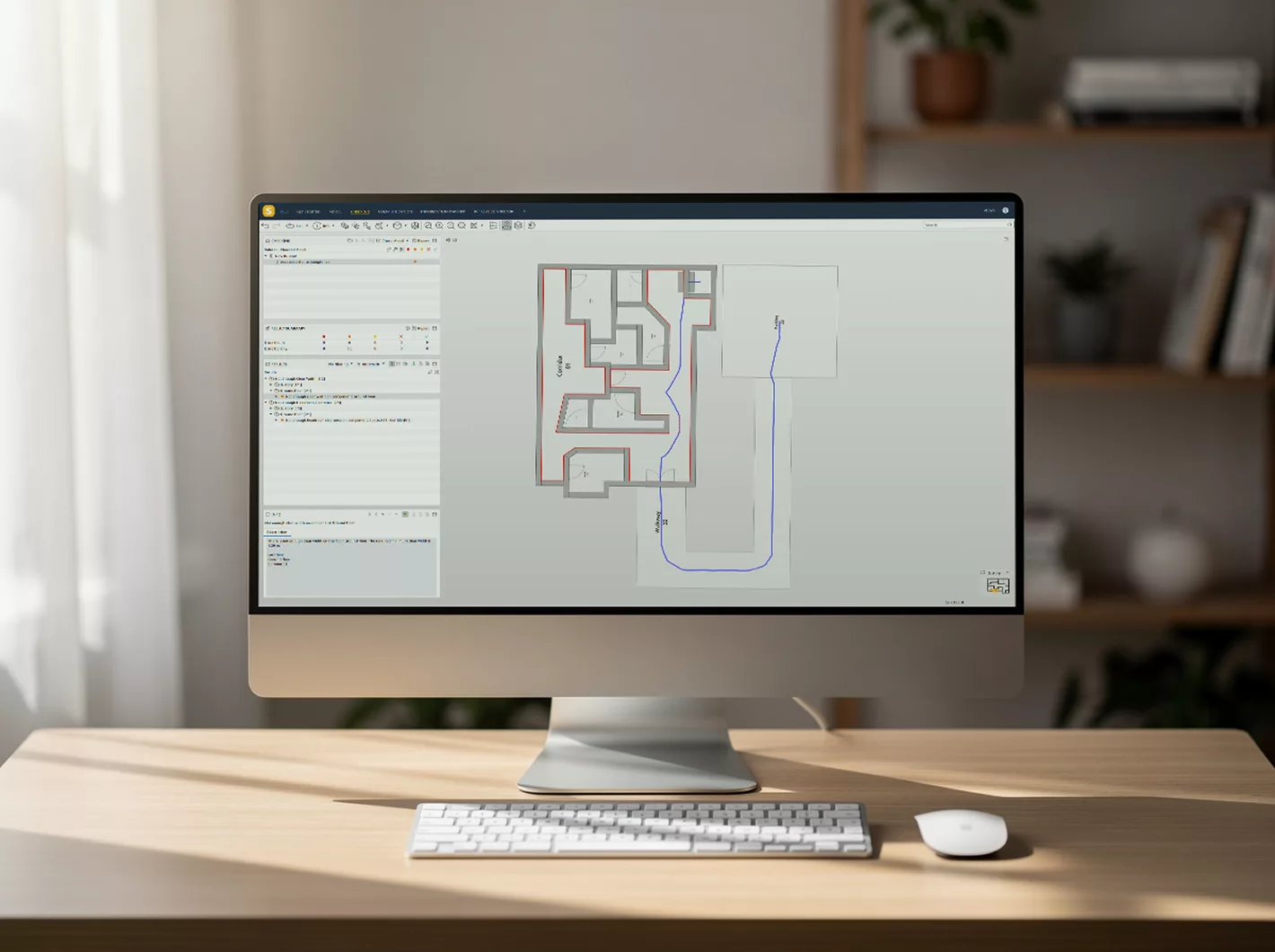
Accessible routes and circulation space are central to accessibility design. Buildings must provide accessible routes connecting entrances, rooms, facilities, and exits. These routes must meet requirements related to width, turning space, and clearance around objects such as furniture, equipment, and sanitary fixtures.

When multiple disciplines contribute to building layouts, circulation space and clearance requirements may be affected by design changes. Without structured review workflows, accessibility issues may only be identified late in the design process.

Solibri supports rule-based model checking workflows that can be used to review accessible routes, circulation space, and clearance requirements within BIM models based on project requirements and defined rulesets. These workflows support more consistent review of accessibility design information across building models.

Solibri accessibility floor space 1

Accessible doors, ramps, stairs, and openings

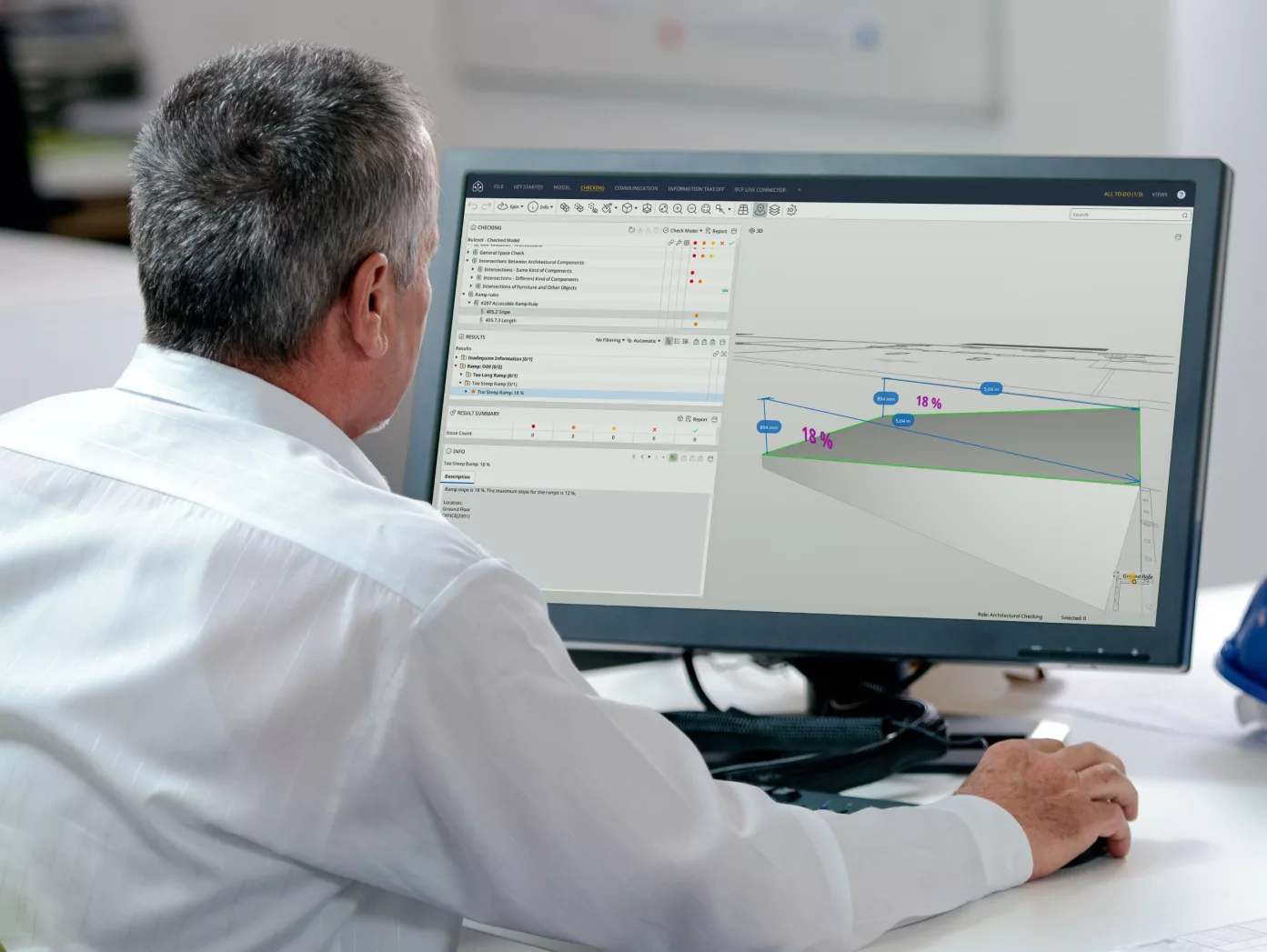
Accessibility requirements also apply to specific building elements such as doors, ramps, stairs, windows, and entrances. Doors must provide sufficient maneuvering space, ramps must meet slope and landing requirements, and stairs must meet dimensional and safety requirements depending on accessibility standards and project requirements.

These requirements may be affected by changes in wall locations, door positions, floor levels, and building layouts during design and coordination. Reviewing these requirements within BIM models supports better visibility of accessibility-related design information as the project develops.

Solibri supports model checking workflows that can be used to review accessibility-related design information such as door clearance, ramp dimensions, stair requirements, accessible windows, and free floor space within BIM models based on project requirements and defined rulesets.

Accessibility and digital building permitting

In many regions, accessibility requirements are part of building regulations and must be reviewed during building approval or digital permitting processes. Accessibility requirements may need to be demonstrated through drawings, documentation, and increasingly through BIM models and digital submissions.

Model-based checking workflows can support accessibility review processes by allowing accessibility-related design information to be reviewed within BIM models and documented through model checking reports and validation workflows. This can support project documentation and digital building permitting workflows depending on project requirements and local regulations.

Solibri supports model checking and reporting workflows that can be used to review accessibility-related design information and document model checking results as part of project documentation and digital building permitting processes.

Solibri accessibility ramps

Accessibility validation throughout design and coordination

Accessibility should be reviewed throughout design and coordination as building layouts, doors, equipment, and circulation routes change during the project lifecycle. Reviewing accessibility requirements only at the end of the design process may lead to redesign, coordination issues, or permitting delays.

Model-based checking workflows allow accessibility-related design information to be reviewed repeatedly as the design evolves, supporting better coordination between disciplines and more consistent accessibility design review processes.

Solibri supports repeatable model checking workflows that help project teams review accessibility requirements, track issues, and document model checking results during design and coordination.

Solibri accessibility validation

Why use Solibri for accessibility validation

Solibri provides rule-based model checking tools that support the review and validation of accessibility-related design information within BIM models. These workflows can help project teams review accessible routes, circulation space, doors, ramps, stairs, and clearance requirements based on project requirements, defined rulesets, and available model data.

By supporting structured model checking workflows, Solibri helps project teams improve coordination, model quality, and documentation related to accessibility design and building regulations.

Solibri solutions for model checking and validation

Solibri solutions support model checking, coordination, validation, and information management workflows across different project stages and organizational needs. From individual model review to organization-wide model governance and secure environments, Solibri solutions support structured model checking workflows across the building lifecycle.

Depending on project requirements, team size, and organizational workflows, Solibri solutions can support design review, coordination, validation of information requirements, digital building permitting, and lifecycle information management workflows.