Skip to content
Hospitals

Validated models for buildings where errors carry real consequences

In hospital construction, late-stage coordination failures do not only cost time and money: they delay facility openings and compromise the conditions that clinical teams and patients depend on.

Solibri's rule-based BIM validation identifies coordination conflicts, incomplete data, and classification errors in the model before they reach the construction site or the handover record.

PPT BG Hospitals v2 300x

Hospital construction demands verified coordination, not assumptions

Hospital projects bring together architects, structural engineers, MEP consultants, medical planners, infection control advisors, and multiple specialist contractors, often working across different BIM platforms under separate contractual frameworks.

When models from these disciplines go unchecked, coordination conflicts accumulate. They surface during construction, commissioning, or after handover when facilities teams discover records that do not match what was built.

Solibri applies rule-based validation across federated models regardless of authoring platform. Every discipline works within the same quality framework. Coordination conflicts are identified early, when resolution costs a fraction of what they cost on site.

The result is a construction process where model quality is demonstrated, not assumed.

Preventing rework in complex, multi-disciplinary healthcare environments

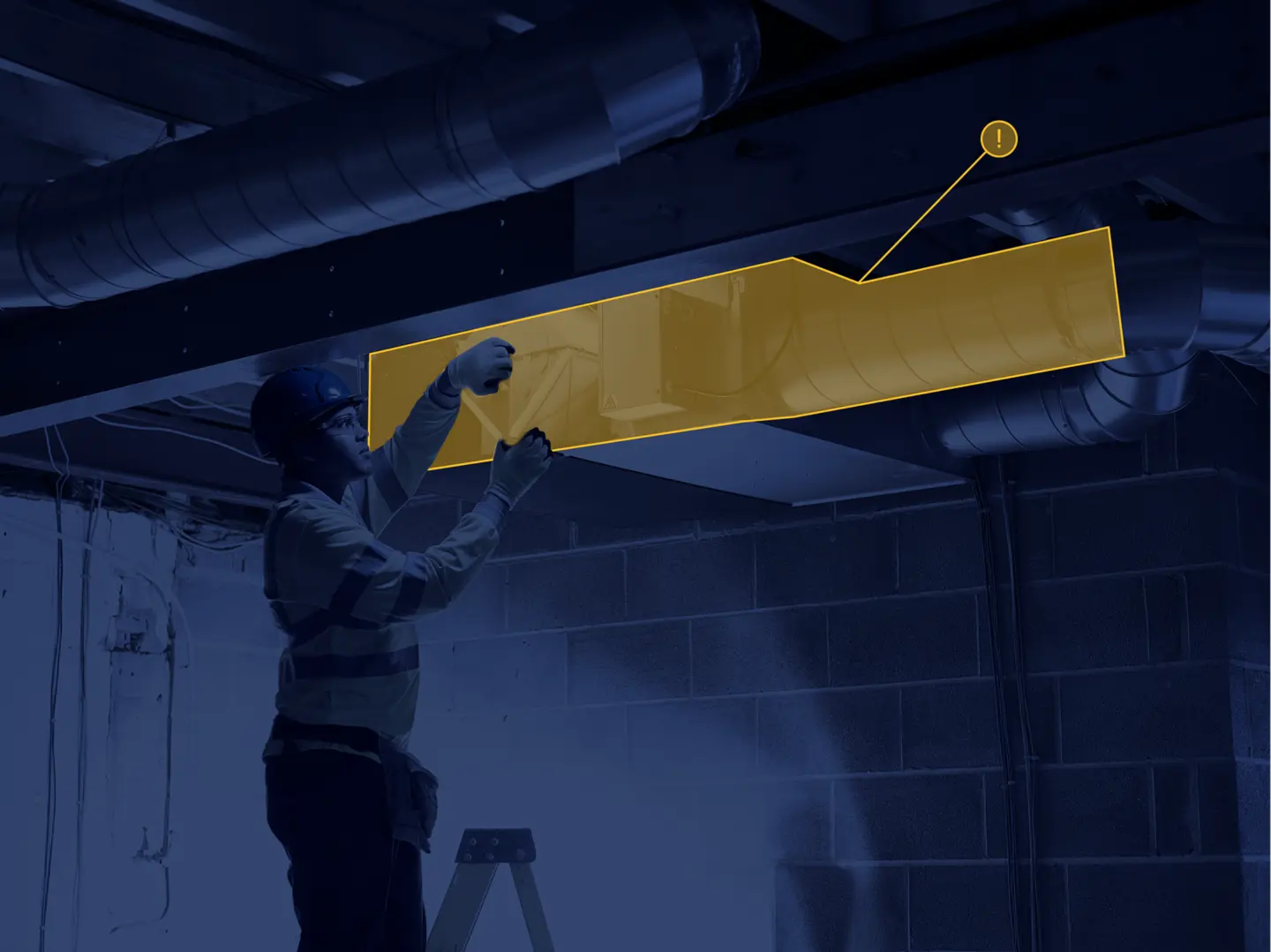
In hospital projects, rework carries compounding risk. A missed clash between a structural element and a ceiling-mounted medical gas pipeline creates more than a coordination issue: it can trigger redesign, installation rework, resequencing, and delays to commissioning readiness.

Validated models reduce the project exposure that unresolved coordination issues and unreliable model data create. Before installation sequences are locked in, or model information is used to support quantities, procurement, and planning, Solibri helps confirm that what the model shows is coordinated, complete, and reliable enough to move forward.

For health authorities and main contractors carrying programme-level risk on hospital builds, this translates directly into measurable reductions in budget exposure and fewer downstream claims.

Solibri Hospitals rework

Ensuring MEP accuracy before installation begins

In hospitals, building systems carry a different level of consequence. Medical gas pipelines, sterile ventilation zones, fire-rated penetrations, emergency power routing, infection control barriers, and patient monitoring infrastructure must be correctly positioned, classified, and validated before installation begins.

Solibri applies rule-based checking to MEP models against project-specific standards and information requirements. Missing data, classification errors, and MEP system clashes are identified before they affect procurement quantities or installation sequences. The model that reaches site has been verified against the information requirements the project team defined.

Where healthcare standards define specific information requirements, including required property sets, classifications, naming conventions, and model data, those requirements are encoded as rules and applied consistently across every model submission, reducing reliance on manual checking and individual reviewer judgment.

Solibri MEP hospitals

Compliance and accessibility validation across the full design

Hospital buildings operate under rigorous compliance requirements:

  • Patient room dimensions
  • Corridor clearances
  • Accessible toilet provisions
  • Wayfinding geometry
  • Fire egress routes

These must all be verified, and that verification must be auditable.

Solibri's accessibility and rule-based compliance checking validates spatial and data requirements across the design, producing structured evidence that the model meets defined standards before regulatory submission or construction begins.

For projects subject to national building regulations, health authority requirements, or digital permitting workflows, this structured, auditable approach to compliance verification accelerates approval processes and reduces the risk of late-stage design changes.

Delivering building information that facilities teams can rely on

Hospitals are operated for decades. The quality of building information delivered at handover determines how effectively facilities teams manage maintenance schedules, plan clinical reconfigurations, and respond to infrastructure failures.

Poor handover information is one of the most persistent and costly problems in healthcare facility management. Missing asset records, incomplete room classifications, unverified equipment data, and inaccurate as-built documentation compound over time, creating operational inefficiencies and limiting the value of the original BIM investment.

Solibri validates handover models against defined information requirements before delivery. Every asset record, classification, property set, and spatial attribute is checked against the requirements of the receiving facilities team, ensuring that what is delivered is complete, accurate, and operationally usable.

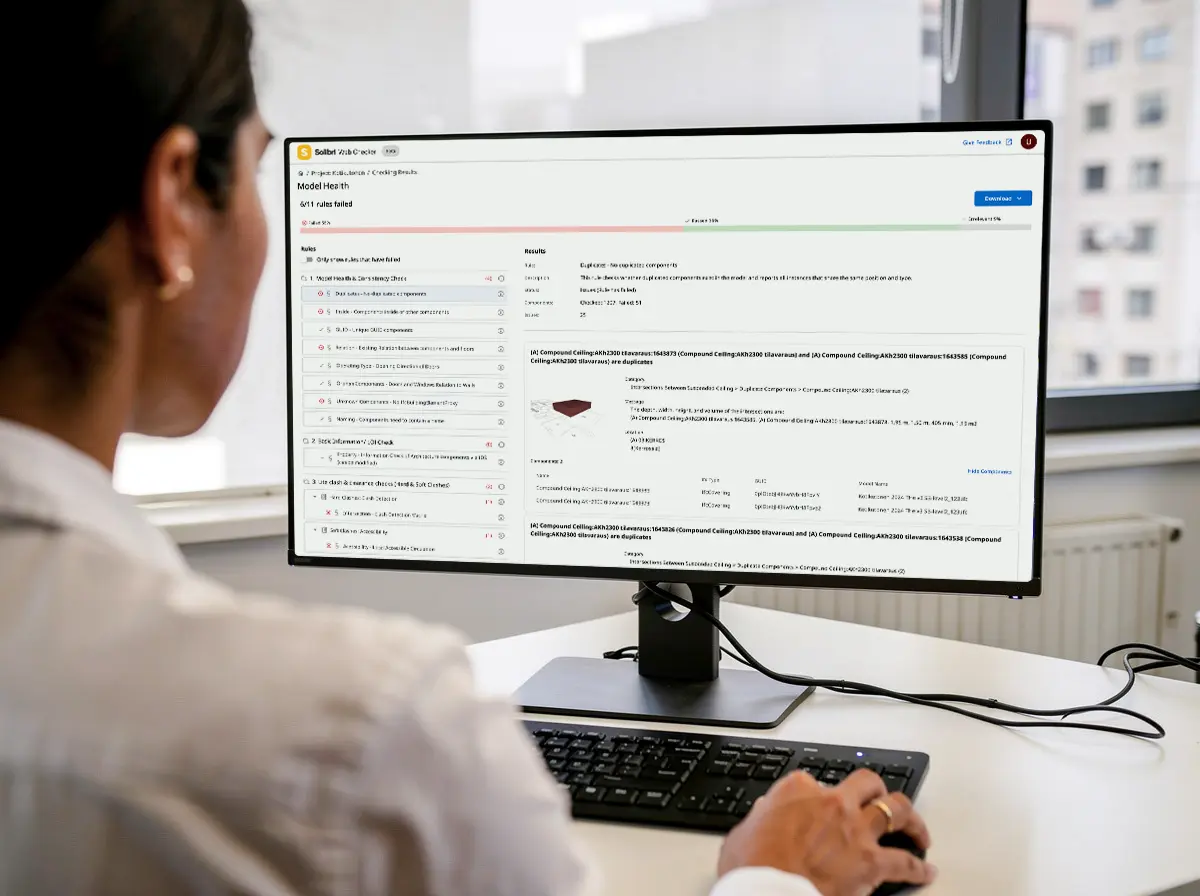
Solibri Web Checker screen

Renovation and phased delivery in operating healthcare environments

Healthcare facilities require continuous renewal. New clinical requirements, evolving building standards, and ageing infrastructure create an ongoing programme of construction, and that construction must be delivered within, adjacent to, and around an operating hospital.

Solibri validates renovation and refitting models against retained building information and reality capture data, helping teams confirm existing conditions before design or installation decisions are made. By bringing point cloud data into the workflow, teams can combine scans of the existing building with BIM models of the planned intervention to identify clashes, check clearances, and confirm alignment between site conditions and model components. This supports reliable design coordination before installation and as-built verification after construction, helping teams identify deviations between site reality and the model.

For health authorities managing large estate portfolios, this provides a consistent quality standard across multiple simultaneous projects, regardless of which design teams or contractors are involved.

Healthcare environments where Solibri eliminates coordination risk

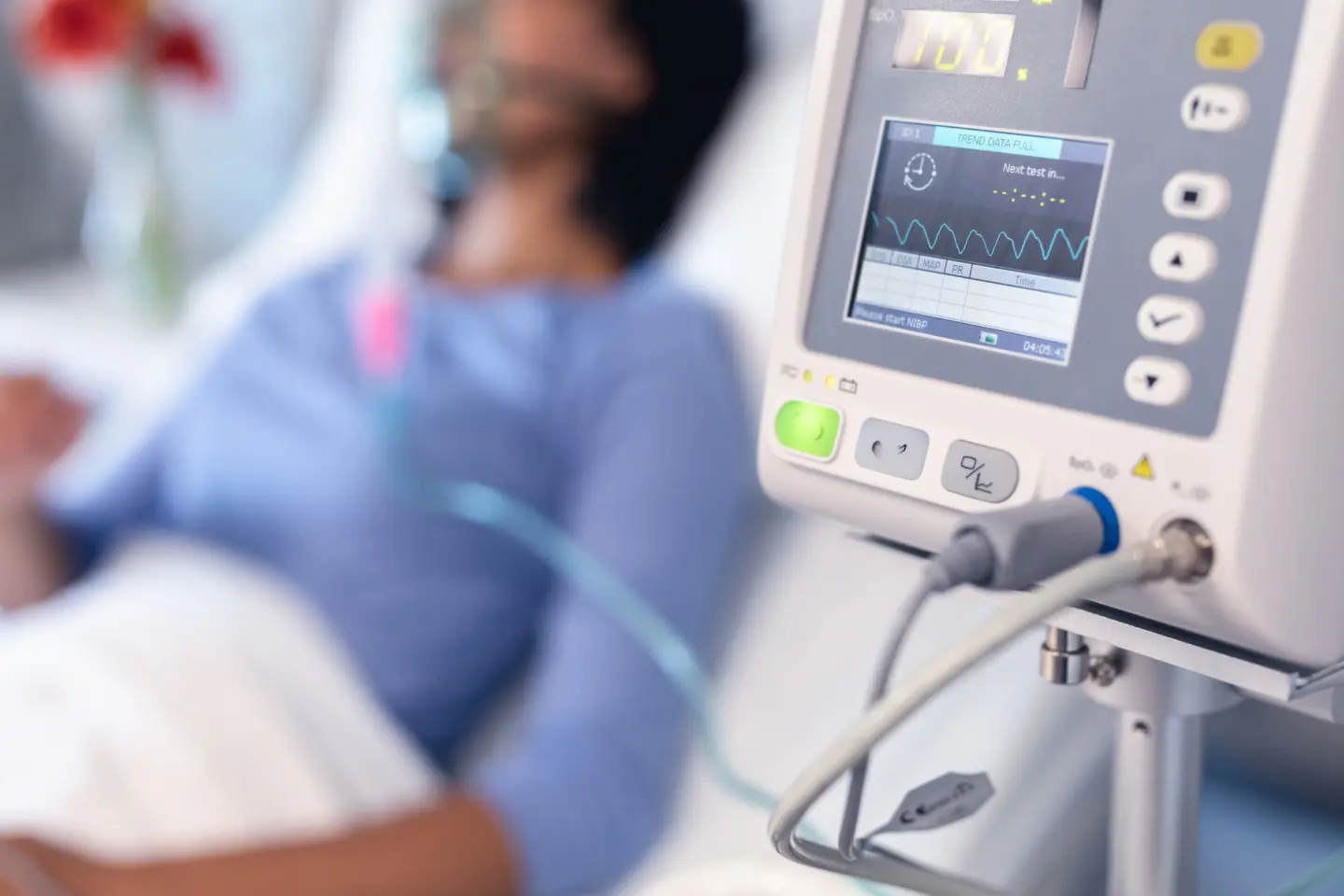
Ventilator monitor and african american female patient in hospital bed with oxygen ventilator. medicine, health and healthcare services during coronavirus covid 19 pandemic.

Acute and specialist hospitals

New-build and major refurbishment programmes for acute care, specialist treatment centres, and teaching hospitals, where multi-disciplinary coordination, life-safety system validation, and digital handover are critical to delivery.

Solibri hospitals primary care

Primary care and community health facilities

Multi-tenanted primary care buildings and health centres where spatial accuracy, accessibility compliance, and reliable asset information at handover determine long-term operational performance.

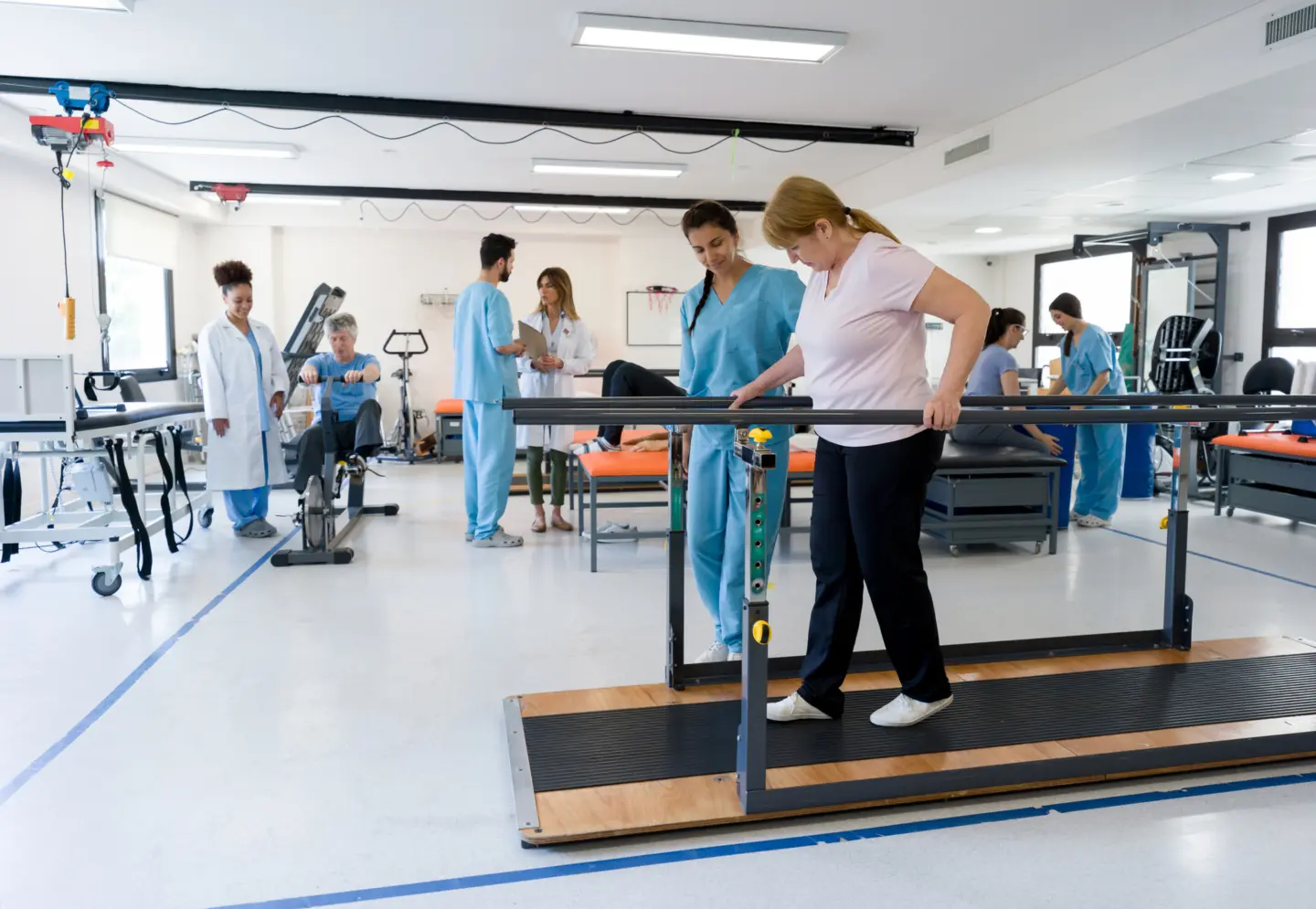
Group of patients and therapist at physical therapy exercising - Healthcare concepts

Mental health and rehabilitation facilities

Environments where room classification, therapeutic design criteria, safety provisions, and spatial quality must be validated and documented throughout the construction process.

African American nurse working at the laboratory organizing test tubes - healthcare and medicine concepts

Research and laboratory facilities

Specialist environments with complex MEP, containment, and ventilation requirements, where model accuracy directly affects commissioning timelines and regulatory sign-off.

Frequently asked questions

Solibri supports the full range of workflows required across a hospital programme: coordination and clash detection across federated models, MEP system checking against project-specific standards, compliance and accessibility validation, and digital handover verification. Rules are authored once and applied consistently across every model submission throughout the project.

Solibri applies rule-based validation across federated models regardless of which BIM authoring platform each discipline uses. Every team works within the same quality framework: coordination conflicts, missing data, and classification errors are identified before models are merged or issued for construction. This removes the reliance on manual coordination reviews and individual reviewer judgment at each model exchange.

Yes. Project-specific requirements, including healthcare-sector property sets, naming conventions, and information delivery specifications, are encoded directly as validation rules in Solibri. These rules are applied consistently to every MEP model submission, ensuring that medical gas systems, sterile ventilation zones, emergency power routing, and other life-safety infrastructure are checked against the requirements the project team defined before installation begins.

Solibri validates handover models against the information requirements of the receiving facilities team before delivery. Every asset record, room classification, property set, and spatial attribute is checked to confirm it is complete, correctly classified, and operationally usable. This ensures that the building information delivered at practical completion is accurate and fit for use across the hospital's operational lifespan.

Yes. Solibri validates renovation and refitting models against retained building information, identifying clashes with existing systems and maintaining coordination accuracy across phased delivery programmes. For health authorities managing large estate portfolios, this provides a consistent quality standard across simultaneous projects regardless of the design teams or contractors involved.

Prove quality, do not assume it

Hospital projects do not tolerate assumptions. Coordination must be verified. Compliance must be demonstrated. Handover data must be complete. And rework must be prevented before it compounds into programme delays and cost overruns that cannot be recovered.

Solibri gives project teams, health authorities, and contractors the tools to validate BIM models, coordinate complex systems, and deliver reliable building information at every phase of a healthcare construction programme. Trusted in over 100 countries, Solibri sets the standard for model quality in digital construction.