Skip to content
Life-Safety, Compliance & Regulatory Approval

Compliance you can prove, not just claim

Hospital buildings operate under some of the strictest compliance requirements in construction. Fire and smoke compartmentation, infection-control zoning, egress routes, and accessibility clearances all have to be verified, and that verification has to be auditable, not simply signed off.

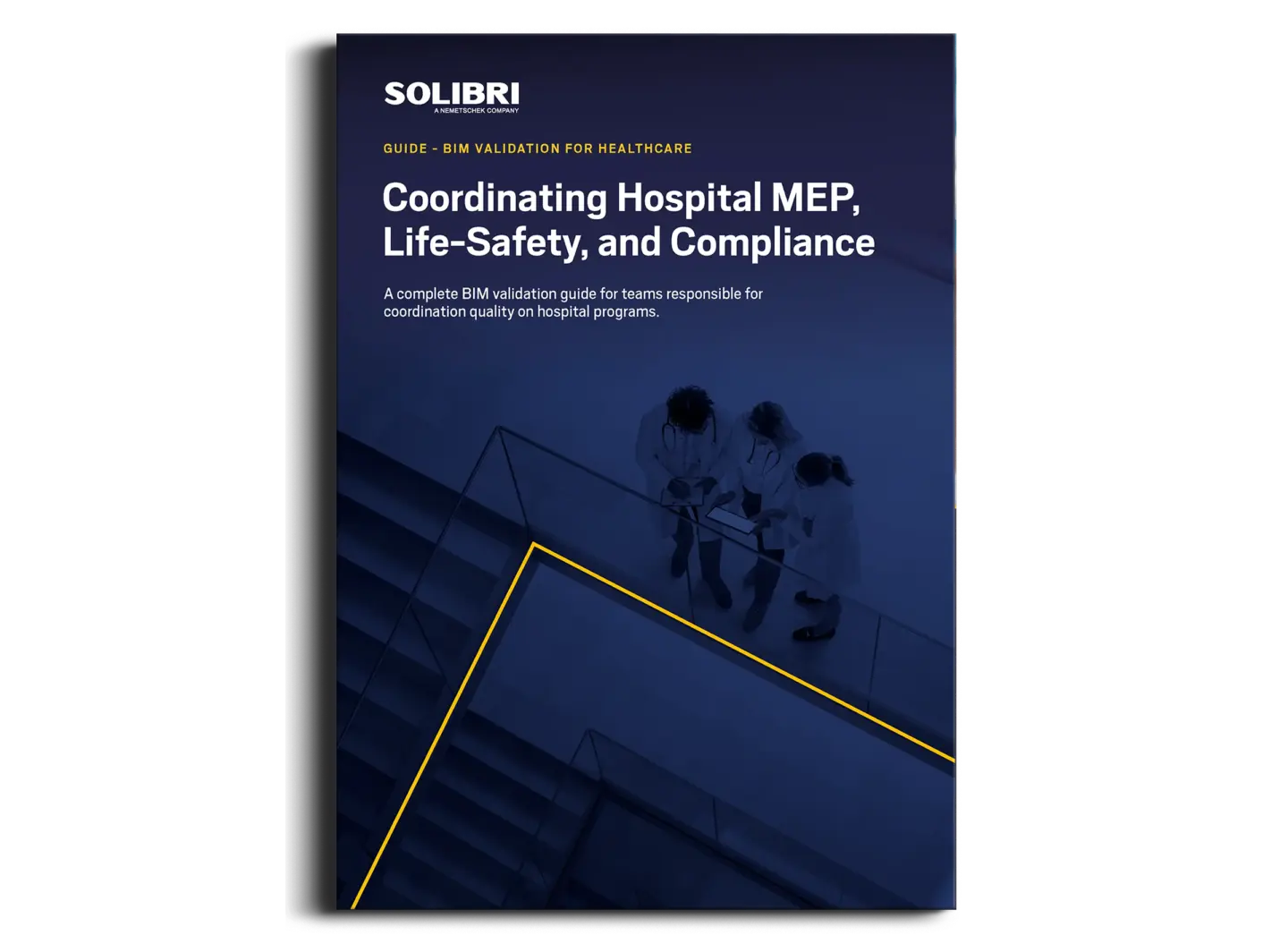
For teams managing hospital BIM quality, we created a practical guide to show how MEP coordination, life-safety validation, accessibility checking, and compliance evidence connect in one model-based process.
Solibri life safety

Hospital compliance requirements do not tolerate assumptions

A missed fire-rated penetration, an incorrectly zoned isolation room, or an accessibility clearance discovered during construction does not only cost time and money. On a hospital project, it can delay regulatory sign-off and the opening of the facility itself.

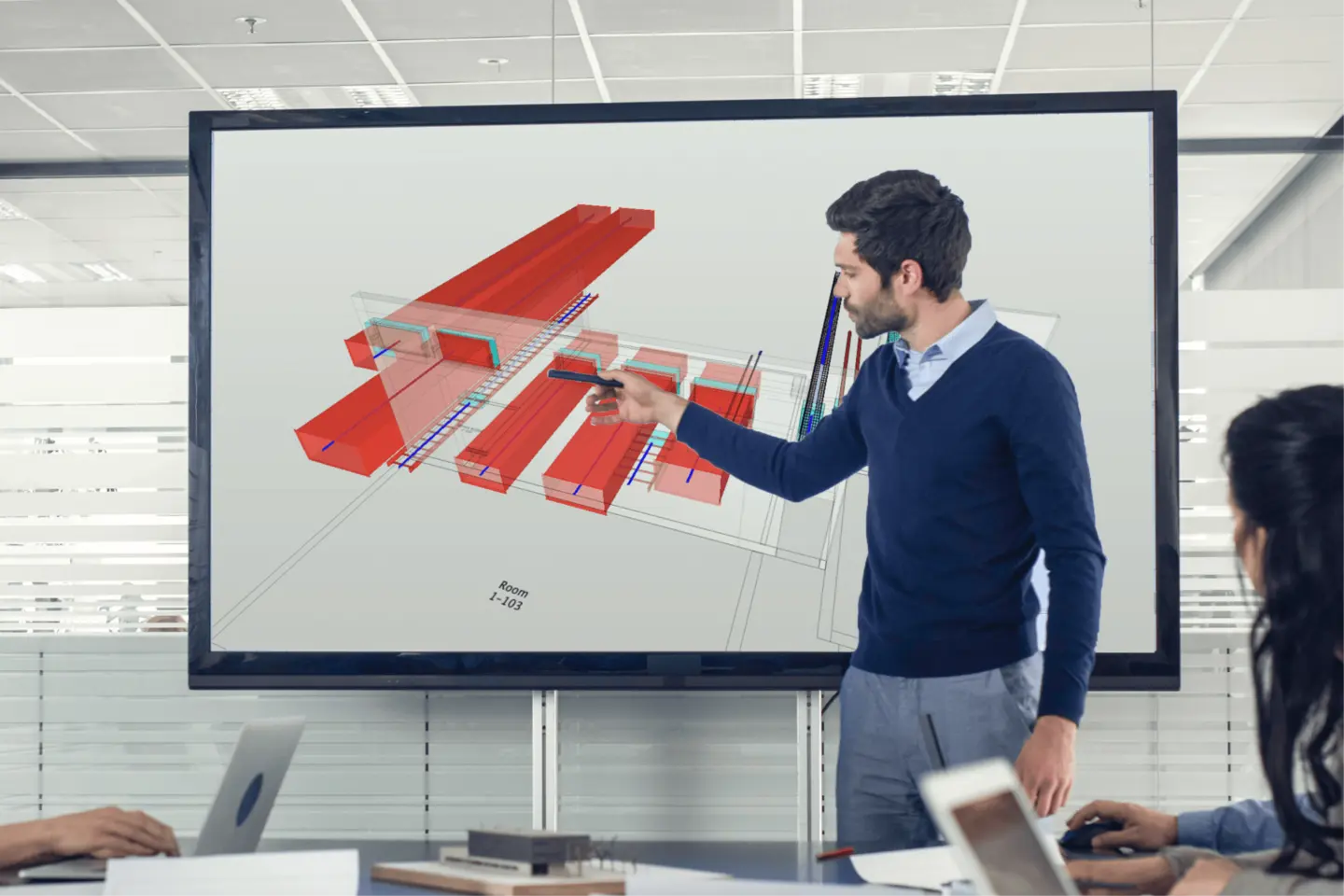
Solibri checks these requirements against the model directly, rather than relying on a reviewer's manual pass, so compliance can be demonstrated rather than assumed.

Fire, Smoke & Egress

Fire, smoke, and life-safety
validation across the model

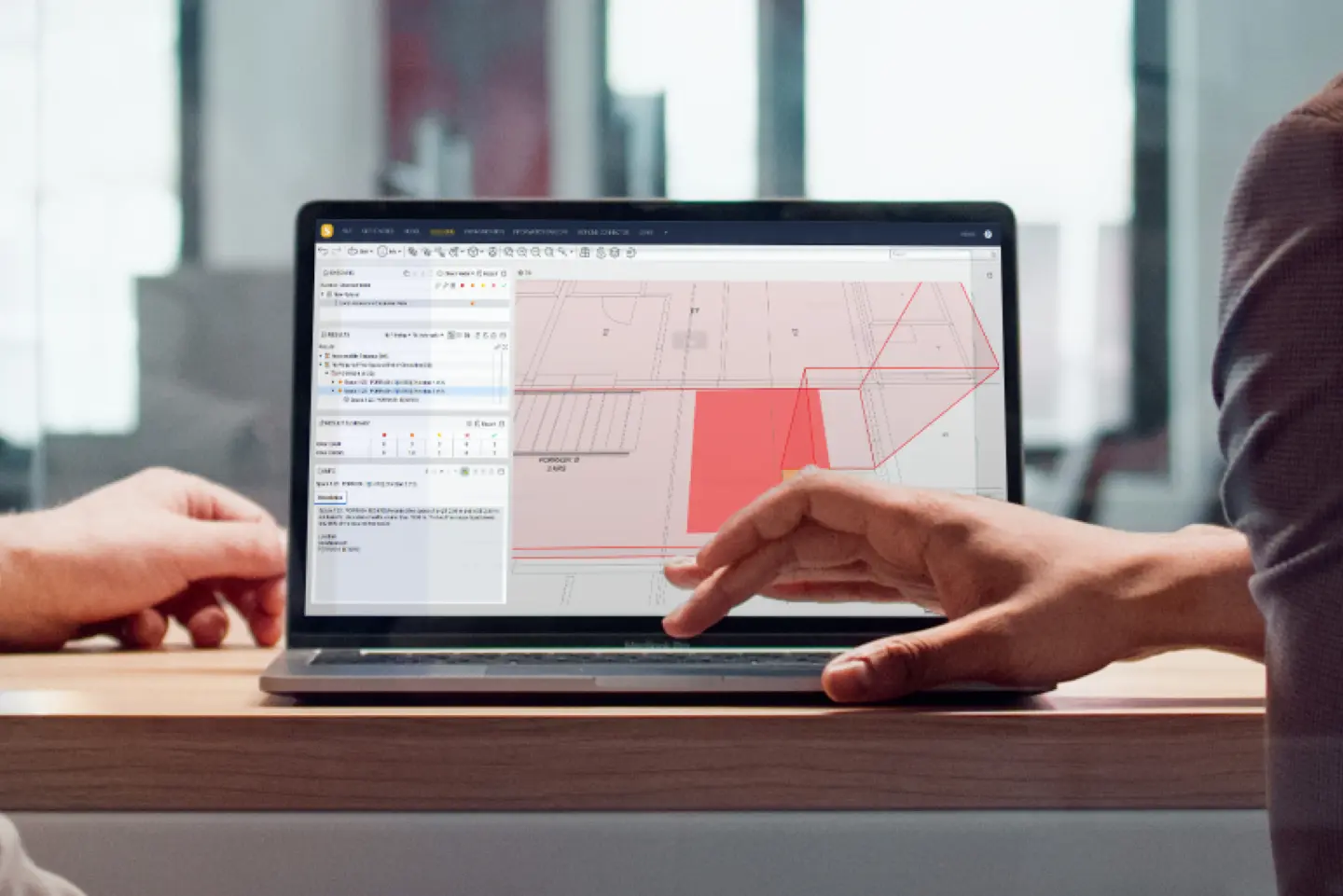
Fire compartmentation, smoke zoning, and egress routes must be verified across every level and every discipline of a hospital model. Manual review struggles to keep this consistent across a model of this scale and complexity.

Solibri applies rule-based checking to validate these requirements automatically, flagging violations before they reach a regulatory reviewer or the construction site.

Solibri Fire safety
Infection control

Infection-control zoning, checked against the standard

Infection-control requirements, including pressure zoning and isolation-room configuration, are among the most safety-critical validation requirements on a hospital project. These requirements have to be checked consistently across every revision of the model, not confirmed once and assumed to hold.

Solibri encodes these requirements as rules and applies them across every model submission, removing reliance on individual reviewer judgment.

Solibri Life safety
Accessibility compliance

Accessibility as a compliance requirement, not an afterthought

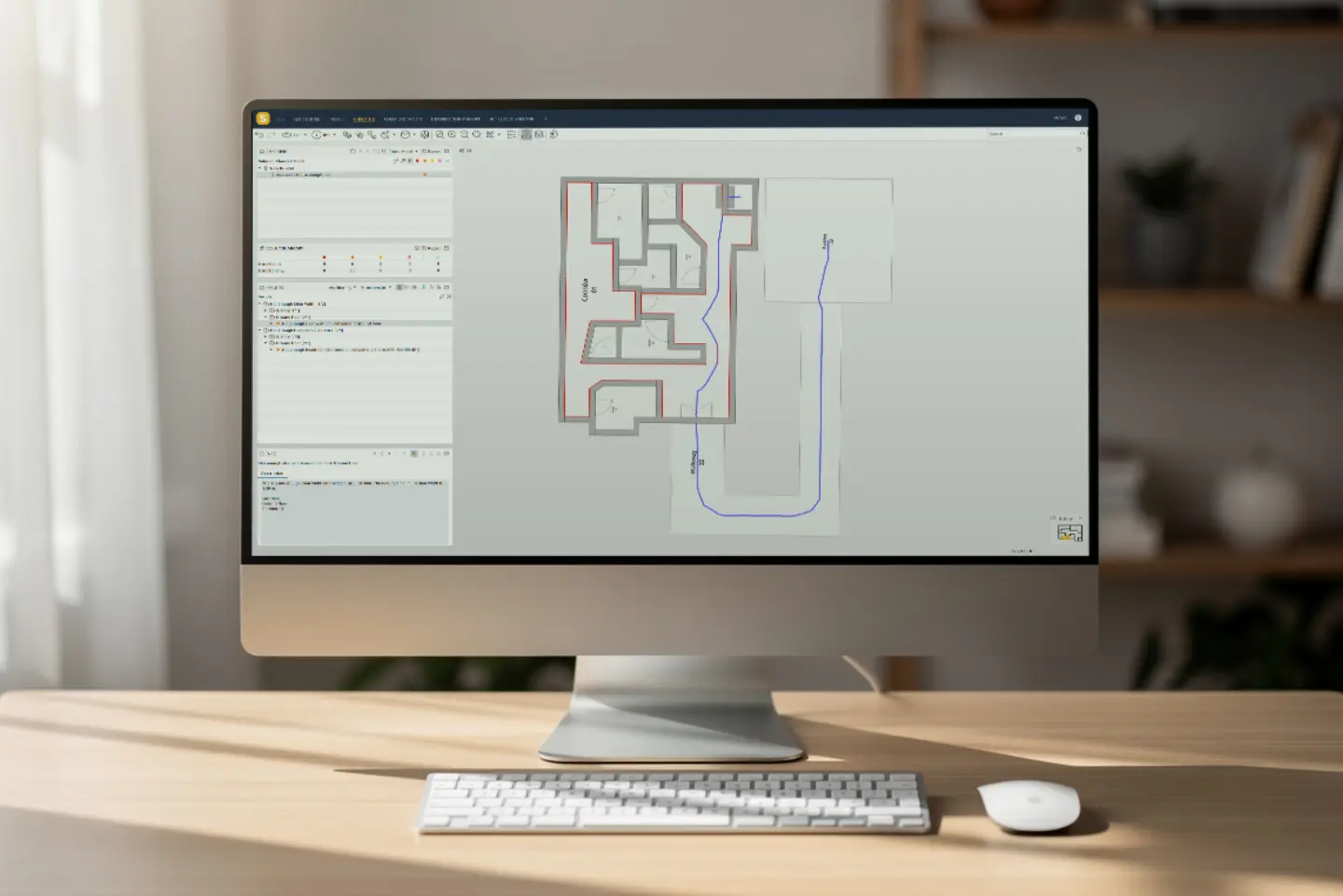
Corridor widths, turning radii, accessible toilet provision, and egress geometry are code requirements, not design preferences. Solibri's accessibility and rule-based compliance checking validates these spatial requirements across the design, producing structured evidence that the model meets defined standards.

Solibri Accessibility

Auditable evidence for regulatory and digital permitting submission

Health authorities and building regulators increasingly expect documented, model-based evidence of compliance, whether through digital permitting workflows or standard regulatory submission. Solibri produces that evidence directly from the validated model, reducing the risk of late-stage design changes driven by a failed submission.

For public-sector or security-sensitive hospital programs, Solibri Security+ delivers the same validation in an air-gapped, ISO 27001-aligned environment.

Download the hospital BIM validation guide

Hospital compliance does not sit in one part of the model. It depends on MEP coordination, life-safety validation, accessibility checking, fire-stopping requirements, and structured evidence that can be reviewed by project teams, owners, and regulators.

Our guide, Coordinating Hospital MEP, Life-Safety, and Compliance, explains how independent, rule-based validation helps teams check these requirements consistently across every discipline, platform, and model revision

Frequently Asked Questions

Yes. Solibri applies rule-based checking to validate fire compartmentation, smoke zoning, fire-rated penetrations, and egress routes across the model. This helps teams identify violations before regulatory review, construction, or commissioning.

Solibri can validate models against project-specific requirements defined by the project team, including local health-authority standards, building regulations, and information requirements. Examples may include FGI Guidelines, HBN/HTM, DIN, or other regional standards, subject to local review and configuration.

Solibri checks spatial requirements such as corridor widths, turning radii, accessible toilet provision, room clearances, and egress geometry against defined rules. This produces structured evidence that accessibility requirements have been checked consistently across the model.

Yes. For public-sector or security-sensitive hospital programs, Solibri Security+ delivers rule-based validation in an air-gapped, ISO 27001-aligned environment. This supports teams that cannot use standard cloud-based workflows due to security or sovereignty requirements.