LOD 400 and BIM Validation Requirements for Data Center Construction
Why Data Center BIM Demands a Higher Standard
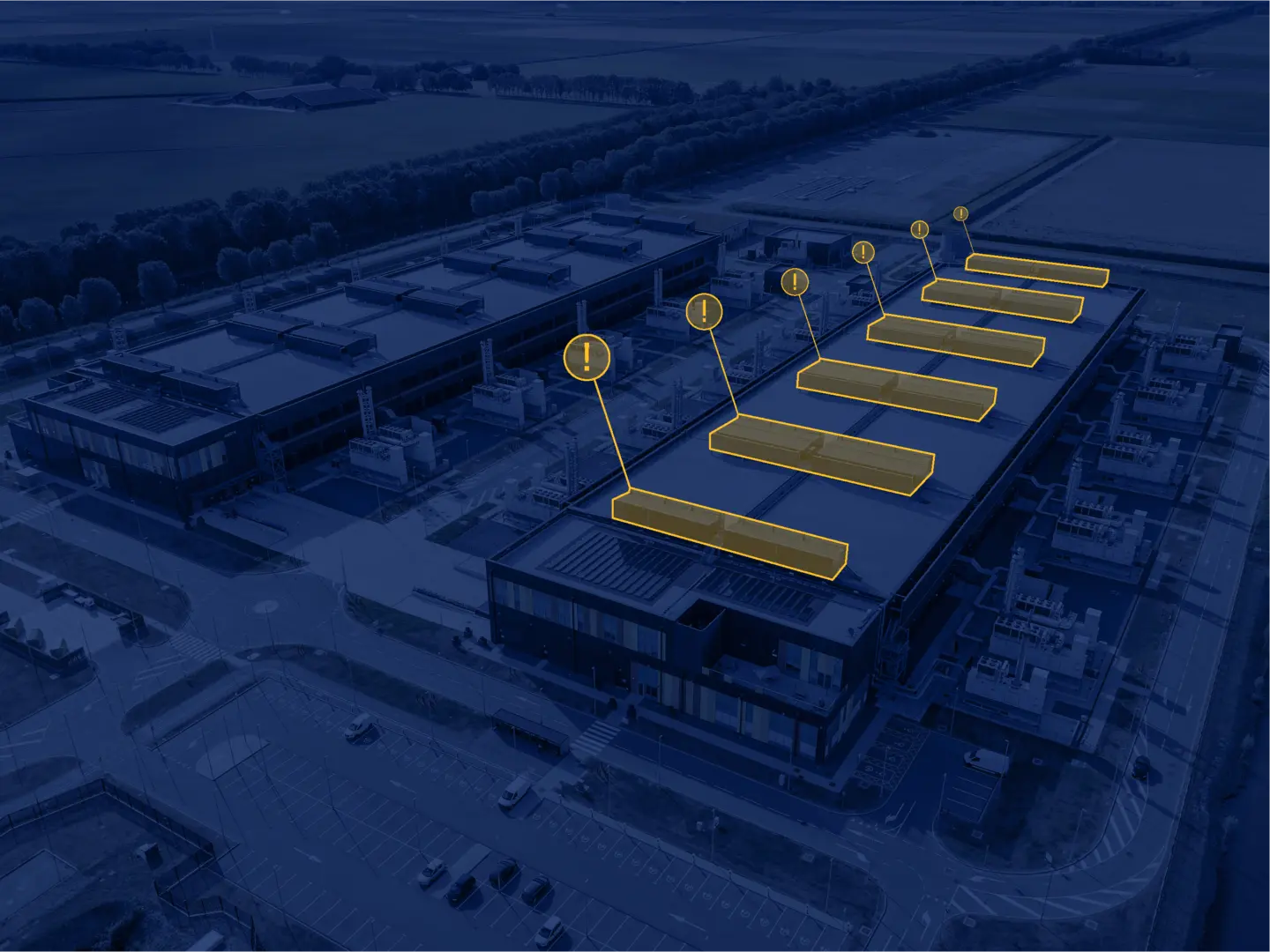
Data centers do not tolerate the margin for error that most buildings can absorb. A conventional commercial building can accommodate a field fix, a change order, or a short delay without threatening the business case. A hyperscale data center cannot. Every month a facility is not energized is a month of lost revenue for the tenant, and every data hall is typically one of many identical halls built in sequence across a campus.
This changes what “good enough” means in BIM coordination. A model that would pass review on an office building can fail badly on a data center project, because the systems inside a data hall are denser, the tolerances are tighter, and the schedule leaves no time to discover a problem twice.
What LOD 400 Actually Requires
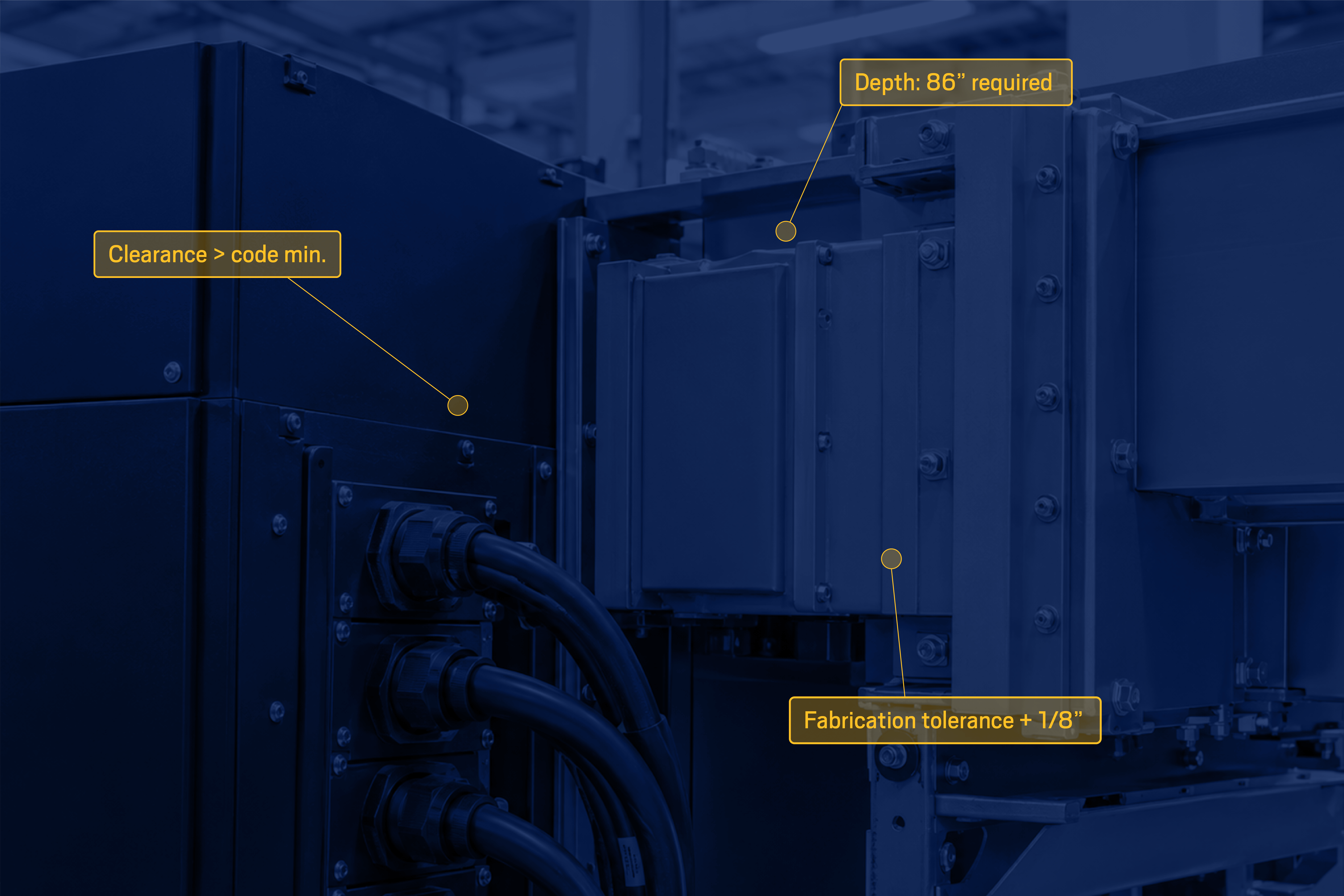
Level of Development (LOD) 400 means a model contains enough detail to support fabrication, assembly, and installation, not just design intent. For data center projects, this typically includes:
- Exact dimensions and connection points for power distribution units, switchgear, and busway systems
- Precise routing for cable trays, conduits, and piping, including hangers and supports
- Confirmed clearances for maintenance access, hot and cold aisle containment, and equipment service zones
- Coordinated cooling infrastructure, including CRAC/CRAH units and, increasingly, liquid cooling systems, modeled to the tolerance required for offsite fabrication
The reason LOD 400 matters so much in this sector is prefabrication. Data center projects increasingly build MEP skids, modular battery rooms, and entire modular data halls offsite, then ship them to the field for assembly. A model built to LOD 400 is not a drawing anymore. It is a manufacturing instruction. If a UPS module is modeled at 84 inches deep and the real component is 86, the fabricated skid does not fit when it arrives. The error is no longer a design correction. It is a physical object that has to be re-fabricated.
Get the Data Center BIM Coordination Checklist
This site is protected by reCAPTCHA.
BIM Validation Is Not the Same as Clash Detection
These two terms are often used interchangeably, and the difference matters more in data center construction than almost anywhere else in the built environment.
Clash detection finds where two modeled objects occupy the same physical space. It answers one question: does this pipe intersect this duct? It is a necessary check, and every data center project runs it constantly.
BIM validation goes further. It confirms that a model meets a defined set of rules, not just geometric non-interference. Validation checks whether equipment clearances meet code and manufacturer requirements, whether classification and property data are complete enough to support downstream fabrication and facility management, whether accessibility and fire safety logic hold up across the full model, and whether the model as a whole is consistent enough to trust.
A model can pass every clash check and still fail validation, because clash detection has nothing to say about whether the data behind the geometry is correct, complete, or compliant. In a data center, where equipment specifications, redundancy requirements (2N power, N+1 cooling, and similar configurations), and commissioning documentation all depend on that underlying data being right, validation is the layer that clash detection alone cannot provide.
The Cost of Getting Coordination Wrong at Hyperscale
Rework carries a different cost profile in data center construction than in general commercial building. Industry-wide, rework is estimated to consume 5 to 12 percent of total project value. In a hyperscale project, that percentage lands on a much larger base, and the multiplier effect of repeatable data halls means a single undetected error can replicate across every hall built from the same model before anyone catches it.
The construction industry entering 2026 is already under pressure from labor shortages and compressed schedules, with some single campuses requiring thousands of workers where a few years ago several hundred would have sufficed. Under that kind of pressure, teams do not have slack to absorb late-stage coordination failures. Every clash caught after fabrication begins costs materially more than the same clash caught on screen, in engineering time, materials, and schedule.
What to Look for in a Validation Approach

Teams evaluating how to strengthen data center BIM coordination should look for an approach that can do the following, regardless of which specific tool or vendor they choose:
- Rule-based, not just visual. The approach should apply consistent, repeatable rules across every model, rather than relying solely on a person visually reviewing a 3D view.
- Vendor-neutral and IFC-based. Data center projects span architects, structural engineers, MEP consultants, and fabrication partners, often on different authoring tools. A validation approach built on open standards (IFC/openBIM) works across that mixed environment instead of locking coordination into a single authoring platform.
- Scalable across a portfolio. A single-project clash review does not scale to a developer building dozens of near-identical data halls across multiple campuses. The approach should support governance and repeatable rule sets across an entire portfolio, not just one project.
- Auditable. Given the compliance and uptime guarantees tied to hyperscale contracts, the approach should produce a clear, traceable record of what was checked, what was found, and what was resolved.
Solibri applies rule-based, vendor-neutral validation across data center BIM models, built on IFC and openBIM standards, with governance that scales from a single project to a multi-campus portfolio. Learn more about Solibri’s approach to hyperscale BIM validation.
Already know you need this? Buy Solbiri Advanced now through the Solibri Store, or talk to an expert about your specific project.
Frequently Asked Questions
-
Most data center prefabrication workflows require LOD 400, since fabrication shops build directly from model geometry and cannot absorb the tolerance gaps that a lower LOD would leave unresolved.
-
No. Clash detection identifies geometric conflicts but does not confirm that a model’s data, classifications, and rule compliance are correct. Data center projects typically need both clash detection and rule-based validation.
-
Because much of the construction is prefabricated offsite from the model. An error caught after fabrication begins requires a physical re-fabrication cycle, not just a design revision, and the same error often repeats across multiple identical data halls before it is caught.
-
An IFC/openBIM-based validation approach works across authoring tools, since it evaluates the model through an open, vendor-neutral standard rather than requiring every discipline to work in the same proprietary software.