Opening BIM's Full Potential With Open Data Formats

Building information modeling (BIM) has long held promise for the architecture, engineering, and construction (AEC) industry. That’s the problem, though. The promise of better processes resulting in better buildings, and now transportation infrastructure, isn’t new. Still, decades after BIM’s introduction, many teams aren’t consistently realizing wins here.
Why? We’re making the argument that a huge number of BIM problems stem from a lack of interoperability, or the ability to freely exchange needed information through open data standards and formats. When BIM data gets siloed in proprietary platforms, it does no good to the wide variety of stakeholders involved on the project, often with an equally wide variety of technologies and vendors used to execute their respective roles and responsibilities.
To open up BIM’s full potential, teams need to not just adopt but embrace open data standards and formats. We spoke with Jeffrey W. Ouellette, Progress Advocate for the Built Asset Industry about the opportunities and challenges here.
“A lot of times, teams end up creating models that won’t even work well for others, like a general contractor using the same platform, much less cleanly export to IFC. Most often it’s because there’s a huge lack of consistency in creating good BIM data in the first place. While everybody understands the value of standards, many times they don’t utilize them because they’re complex and require too much effort, or they want to use their own ‘standard’ which they feel best expresses their knowledge and product.”
Jeffrey W. Ouellette, Progress Advocate for the Built Asset Industry
Open vs. closed BIM
In closed BIM, everything about the model has to live in one software ecosystem. The model gets constructed in one platform, exclusively living (and potentially dying) there.
For other stakeholders to access the model and the wealth of information it contains, they may need to directly access that specific platform or figure out how to leverage third-party plugins and workflows. That might mean uncompensated and expensive investment in software licenses, as well as unanticipated time needed for learning the new technology and processes. In this way, closed BIM creates a myriad of obstacles, slowing down the AEC industry’s progress
By contrast, the concept of “open” BIM invites everyone to the table. While using proprietary tools, models get created in ways that support interoperability. That means consistent, well-structured data based on accepted industry standards can be exchanged across platforms, allowing stakeholders to collaborate even if they’re using different BIM authoring, viewing, analysis, and validation tools.
So in the case of buildings, the architect can use Vectorworks Architect, while the structural engineer uses Trimble Tekla Structures, the contractor uses Autodesk Navisworks, and the BIM coordinator uses Solibri. In an infrastructure project, the bridge engineer might use Open Bridge Designer, while the general contractor leverages Trimble Quadri and Connect. Within their platform of choice, everyone is able to engage with the model-based data to get the information they need.

At the same time, open BIM opens up a world of resources internally. When the model can be shared and viewed in different tools like BIM quality assurance solutions, teams can do more with the data. They’re able to perform quality checks on element geometry, relationships, and properties, as well as owners’ design and code requirements.
Plus, owners increasingly request the model during closeout to be utilized for facility and long-term asset management. Turning over an as-built model based on standard open data formats delivers long-term value to the project. With open BIM, everyone can contribute their share to make sure that model reflects the actual build.
Open BIM vs. openBIM
“Open BIM” is the general terminology used to describe BIM processes and technology that allow model data to be shared across platforms. openBIM® is a specific approach to open BIM backed by buildingSMART International (bSI).
The difference between open BIM and openBIM lies in the specifics. The buildingSMART community has created, and is continually developing, open, structured data standards to support collaborative, cross-platform BIM efforts.
The Industry Foundation Classes (IFC) specification (ISO 16739) is the foundation of the openBIM ecosystem. Many people think of IFC just as a file format, but more importantly it’s a semantic data schema describing the parts, people, and processes of a variety of built assets (e.g., buildings, roads, bridges) while being vendor-agnostic, open, and international.
Without getting too technical, that means you can share the information (e.g., geometry, properties, relationships) of a model in one platform, typically a BIM-authoring tool like Vectorworks, Revit, or Tekla, with many other platforms for different uses. Those can include quantity analysis, code compliance, or even visualizations. When you do, the IFC file doesn’t just describe the geometry, so the second platform can accurately represent the model visually. It also captures the model elements’ meaning, physical qualities, and relationships to each other and the asset as a whole.
With IFC and associated standards, openBIM aims to help all AEC stakeholders get clear, accurate information from BIM, no matter the platform they use.
The pain points when teams don’t have interoperability
Why is BIM data exchange so important? When teams don’t have the ability to easily share important project information with accuracy, they hit snags. They risk:
- Siloed data: Without interoperability between platforms, data gets confined to the author’s platform. The architect might have some information about an external curtain wall system while the engineer has other important structural information. Without an opportunity to share or even marry all of that information into a federated (i.e., combined) model, key design and performance information might not reach past its silo. This kind of avoidable misalignment and lack of coordination may lead to miscommunication and expensive rework during construction.
- Missed opportunities for collaboration and communication. Building something requires multidisciplinary participation. BIM should theoretically help align everyone on the same page. Everything gets modeled in detail in three dimensions with appropriate physical, quality, and quantity information and relationships. Then, all stakeholders can see what’s required to bring the project to life if they can see a model that’s truly representative of the project. If models stay siloed in proprietary platforms, team members don’t get the same opportunity to collaborate, troubleshoot, and align for a successful project delivery process and quality final product.
- Loss of quality control: Without a well-structured, standard-driven, shared and/or federated model approach behind the project, each project delivery team’s individual models are likely incomplete. That makes quality assurance efforts like clash detection, clearance checks, and quantity takeoffs much less effective. Conflicts or omissions might not get caught until late in design or, worse yet, until a contractor goes to install something and finds another element in the way or a necessary one missing.
- Extra manual work: With closed BIM, project delivery teams may have to recreate the information from other models in their proprietary software of choice. This extra work can quickly eat into the company’s profit margin for the project. It also introduces the possibility of inconsistencies when someone is manually translating the information they may not have the expertise in fully understanding. The risk of human error may result in a “reauthored” BIM that doesn’t precisely match across stakeholders’ original models.
“No matter what format or platform you use, if you don’t have common, clearly defined expectations of what you’re providing and getting in return, it makes the whole process challenging.”
Jeffrey W. Ouellette, Progress Advocate for the Built Asset Industry
What openBIM means in practice
openBIM (and, by extension, open BIM in general) means that all of the BIM data is available to everyone who needs it. It shifts the focus from the software to the data itself.
“Something we’ve been obsessed about for the last 30 or more years is the tool or platform being used: But a better argument is now starting to take hold, especially when we’re talking about digital twins and asset management. The argument is that the information, freely accessible and owned solely by its creators and owners of the resulting asset, should be the focus and goal. Not a vendor-specific format or set of tools, but the information captured, exchanged, stored, and utilized with open standards and data formats by any number of user-preferred tools.”
Jeffrey W. Ouellette, Progress Advocate for the Built Asset Industry
buildingSMART International and other forces behind open BIM emphasize the importance of having a neutral middle layer to allow stakeholders to exchange information.
In practice, that means designers and engineers can develop their detailed models in their authoring software, then export only the data needed to share with each other and the general contractor for coordination and project construction management. The contractor can then consume the IFC-formatted data to use in their own platform of choice, and the resulting model should be complete with all the metadata the architect included.
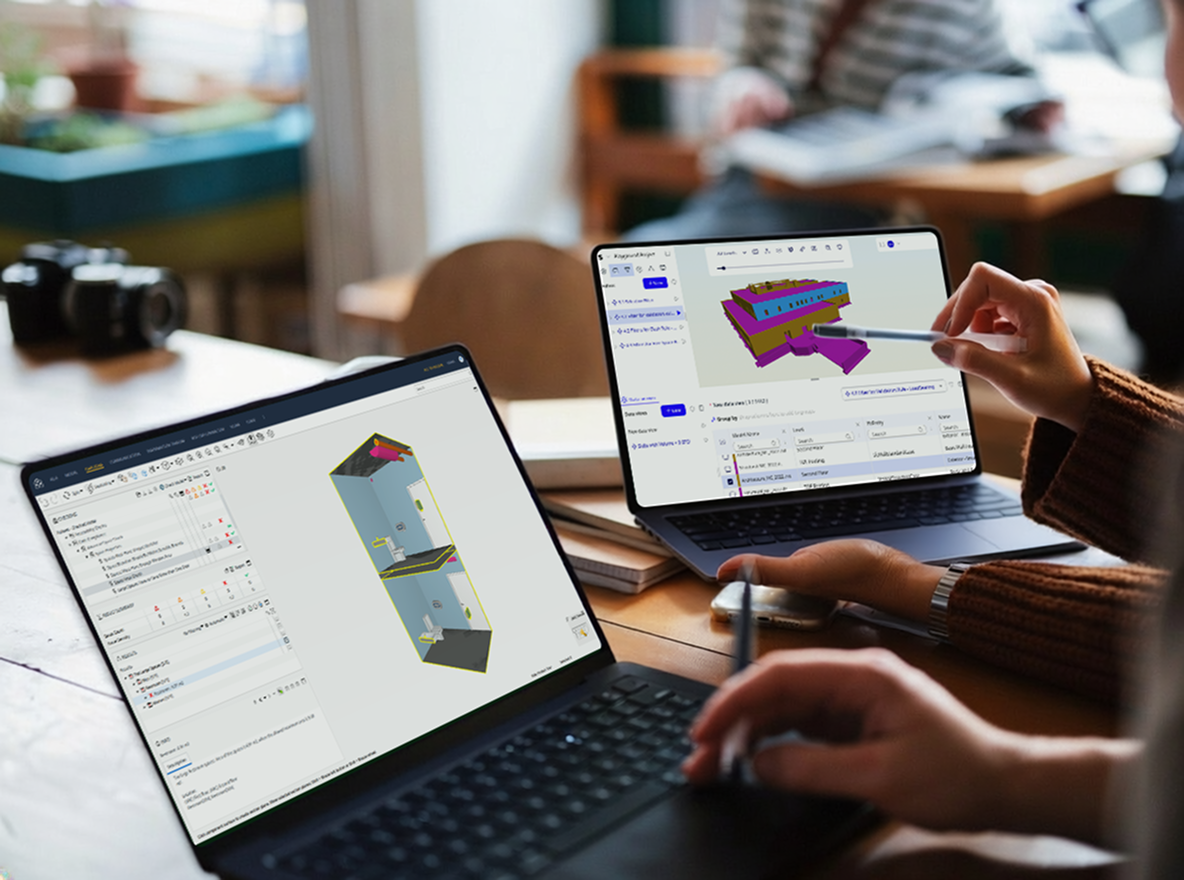
An .ifc file is to BIM what a .csv file is to spreadsheets, or HTML is to the internet. You can open “Financials.csv” in Microsoft Excel, Google Sheets, or Apple Numbers. Or you can open any webpage using any browser on any hardware. No matter which platform you use, you can trust that the data will be accurate once you open the file.
When teams follow openBIM standards, users can expect the same reliability and consistency. And fortunately, applying those standards doesn’t have to be excessively complicated. Most BIM authoring platforms currently include capabilities to export and import the model as an .ifc file.
Key open data standards for BIM
IFC has served as the backbone for openBIM for decades, but it’s not the only open data standard. Other openBIM standards from buildingSMART include:
- BIM Collaboration Format (BCF): BCF was designed to make it easier for teams to share a variety of issues (e.g., element conflicts/coordination, errors or missing information, verifying installation progress) using the IFC model as the basis and XML or JSON as the delivery method for the issues. Think of it as a universal, model-based RFI exchange system.
- Information Delivery Specification (IDS): IDS is an XML-based standard that lets teams define the alphanumeric information requirements (e.g., element types, properties, values for properties) for the exchange and validate that the deliverable, the IFC model, meets those requirements.
“When we talk about openBIM, IFC is the foundation. The other bSI standards and formats are on top of that, providing additional functionality and value to the utilization of IFC.”
Jeffrey W. Ouellette, Progress Advocate for the Built Asset Industry
Other organizations have also developed open data exchange standards and formats which can be used with a variety of BIM data, based on more specific requirements or stakeholder processes. These include:
- Construction Operations Building Information Exchange (COBie): This IFC-based specification was designed by the US Army Corps of Engineers to help the project delivery team share “as-built” data with the owner and their facilities management team.
- Green Building XML (gbXML): gbXML helps facilitate the transfer of BIM data into building performance simulation and energy usage analysis tools with the goal of developing more sustainable projects.
- Associated General Contractors XML (AGCxml): Backed by the AGC, this sets the standard for exchanging project business information between construction management platforms.
- LandInfra (InfraGML): This standard was developed by the Open Geospatial Consortium (OGC) to represent civil engineering (i.e., infrastructure) assets and elements using the GML data standard as the basis.
- LandXML: This standard helps connect built assets to the larger geospatial context. It’s particularly useful for civil engineering and land development projects.
Together with other buildingSMART International software company and academic members, Solibri helped originate the BIM Collaboration Format (BCF), an open standard for exchanging issue‑based comments and viewpoints between different BIM tools, based on IFC models. Today, Solibri continues to deepen its support for IFC (including IFC2x3, IFC4, and IFC4.3), enabling project teams to run advanced quality checks, information takeoffs, and compliance workflows on vendor‑neutral models.
The opportunities opened up by openBIM
When teams use IFC as the basis for openBIM, they can be reasonably confident that when they share information with a variety of project delivery partners and their models, they’re going to be structured in a consistent way. In essence, everyone’s speaking the same language.
That shared language opens up many valuable possibilities. Collaborative, open BIM has a near endless number of potential use cases, including some of the low-hanging fruit teams can typically achieve quickly:
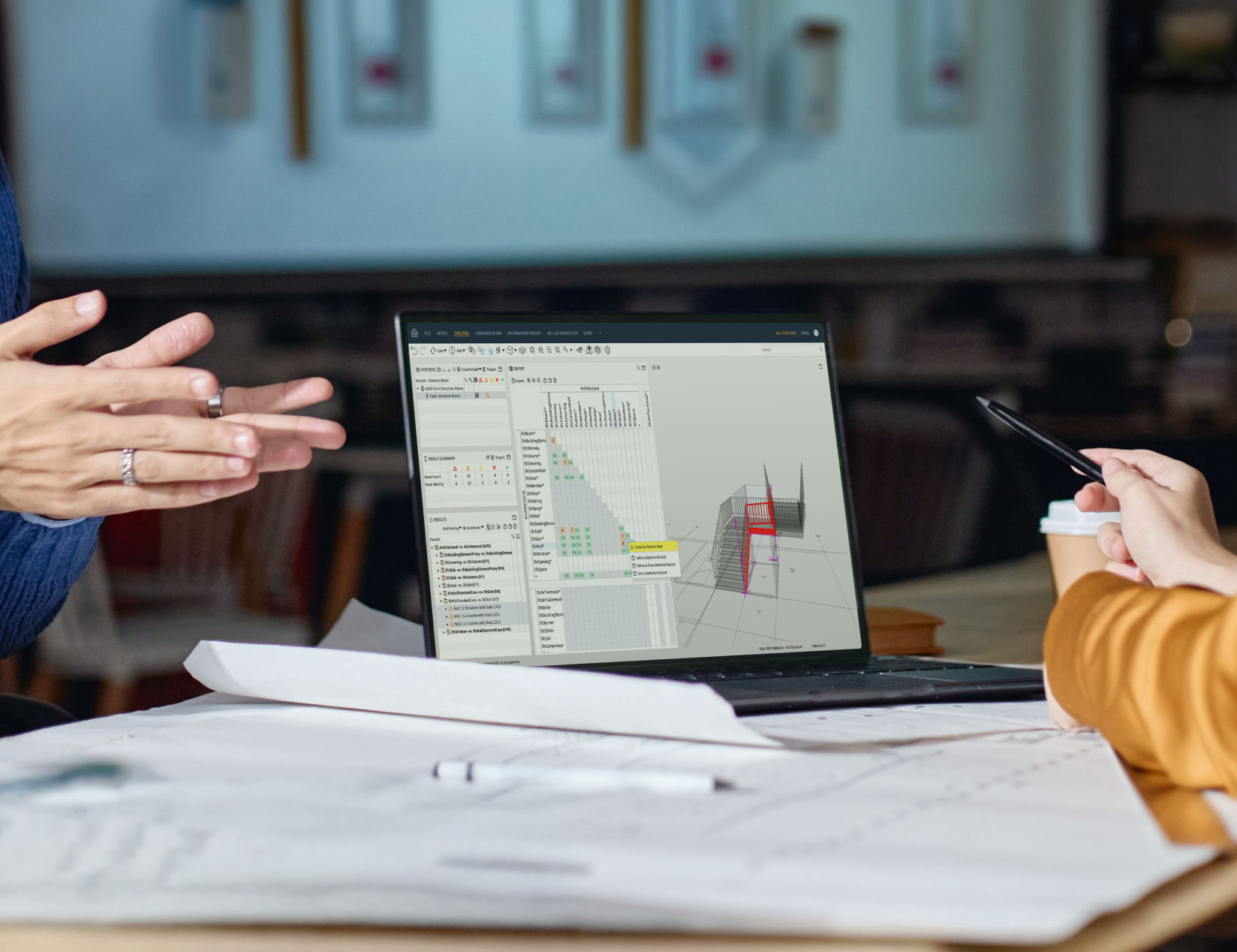
- Streamlined coordination: When everyone marries all of their information into one federated model viewing environment, project coordinators can work from an accurate and complete view. This minimizes coordination conflicts while supporting collaboration. Conflicts or clashes between different system elements can be easily found (e.g., a duct intersecting a steel beam) and omissions can be uncovered during automated and manual reviews.
- Faster, more accurate material takeoffs: With thorough, accurate models, teams can extract quantity information directly from the BIM data. Manual estimation goes out the window and teams arrive at more accurate takeoffs and costs.
- Stronger quality assurance: With fully fleshed out models, teams can most effectively perform QA efforts like checking for compliance with local building codes and national regulations (e.g., the Americans with Disabilities Act [ADA] requirements). They can also make sure the project is meeting the owner’s spatial and programmatic requirements.
“If today, 80% of the industry used openBIM for design coordination 80% of the time, as an industry, we’d be in much better shape. It’s not hard. The overwhelming majority of the tools used today can export and import or view IFC models so you can bring them together and perform such coordination.
Jeffrey W. Ouellette, Progress Advocate for the Built Asset Industry
Looking ahead
Plenty of forces are driving the AEC industry toward more collaborative BIM.
There’s increased owner expectation to be able to use a model. Whether you look at it from the perspective of current trends like “digital twins” or “total cost of ownership (TCO)”, owners want to leverage the information they receive in BIM form at closeout. Their goal is to lower the effort in transferring that data into computerized maintenance management systems (CMMS) or enterprise asset management (EAM) platforms, which may leverage Internet of Things (IoT) and artificial intelligence (AI) technologies. Complete, accurate, well-structured model data is becoming increasingly important for everything from maintenance to retrofits.
There are also increasing international and domestic requirements and regulations where BIM, and even openBIM, is required on project delivery. That’s now true in Finland, Norway, and the UK, for example. In the United States, certain federal agencies, including the General Services Administration (GSA) and the US Army Corps of Engineers (USACE), have BIM and openBIM mandates for some projects.
Even firms that have been slow to adopt BIM will likely need to start leaning into open BIM, as well. Purely throwing a myriad of technology solutions at the problem won’t help AEC firms unlock better results from their building information modeling, though. They need to align their team behind solid, repeatable processes and data standards like openBIM. This way, they can make sure they create models that can be used effectively, reliably, and collaboratively.
As its name suggests, openBIM is an open standard. AEC professionals are invited to contribute their insights to improve the standard.
“buildingSMART standards are only as good as the input they get from the industry. Don’t say, ‘It doesn’t work for me because it doesn’t have X or Y.’ Sometimes it’s a matter of learning from others with more experience, and sometimes a new version of the standard can be developed to include that input. It’s an open invite. openBIM standards aren’t just open for people to use, they’re also open for people to contribute.”
Jeffrey W. Ouellette, Progress Advocate for the Built Asset Industry
When you can trust the information in the model, it becomes a powerful tool to drive strong projects with higher-quality results. openBIM makes it possible to leverage tools like Solibri for geometric analysis/clash detection, data validation, code compliance, accessibility, fire safety, and more.
From the beginning, Solibri has built its solutions around open standards rather than proprietary formats. As an active member of buildingSMART International, Solibri promotes and implements openBIM principles in its products and customer projects.
To see how Solibri can help you use model data to propel project success, learn about our solutions for the building lifecycle.
Author: Kacie Goff, a guest writer from the U.S. specializing in AEC industry topics, in collaboration with Solibri.