The Hidden Cost of Airport BIM Coordination Failures
Rework on an airport program is rarely bad luck. It is the predictable result of many teams working to a standard that nobody checks the same way twice. The industry treats the cost as an unavoidable tax on complex projects. It is better understood as the price of finding errors in the wrong place, on site rather than in the model.
Why airport rework follows a steeper cost curve
Every construction project gets more expensive to change as it moves from design to site. Airports steepen that curve in three ways.
First, the number of hands on the model. A terminal program combines structural, MEP, civil, airside, baggage handling, and security systems, delivered by different contractors, often from different countries, in different authoring tools, on different schedules. Every interface between those teams is a place where one team's assumption can break another team's requirement.
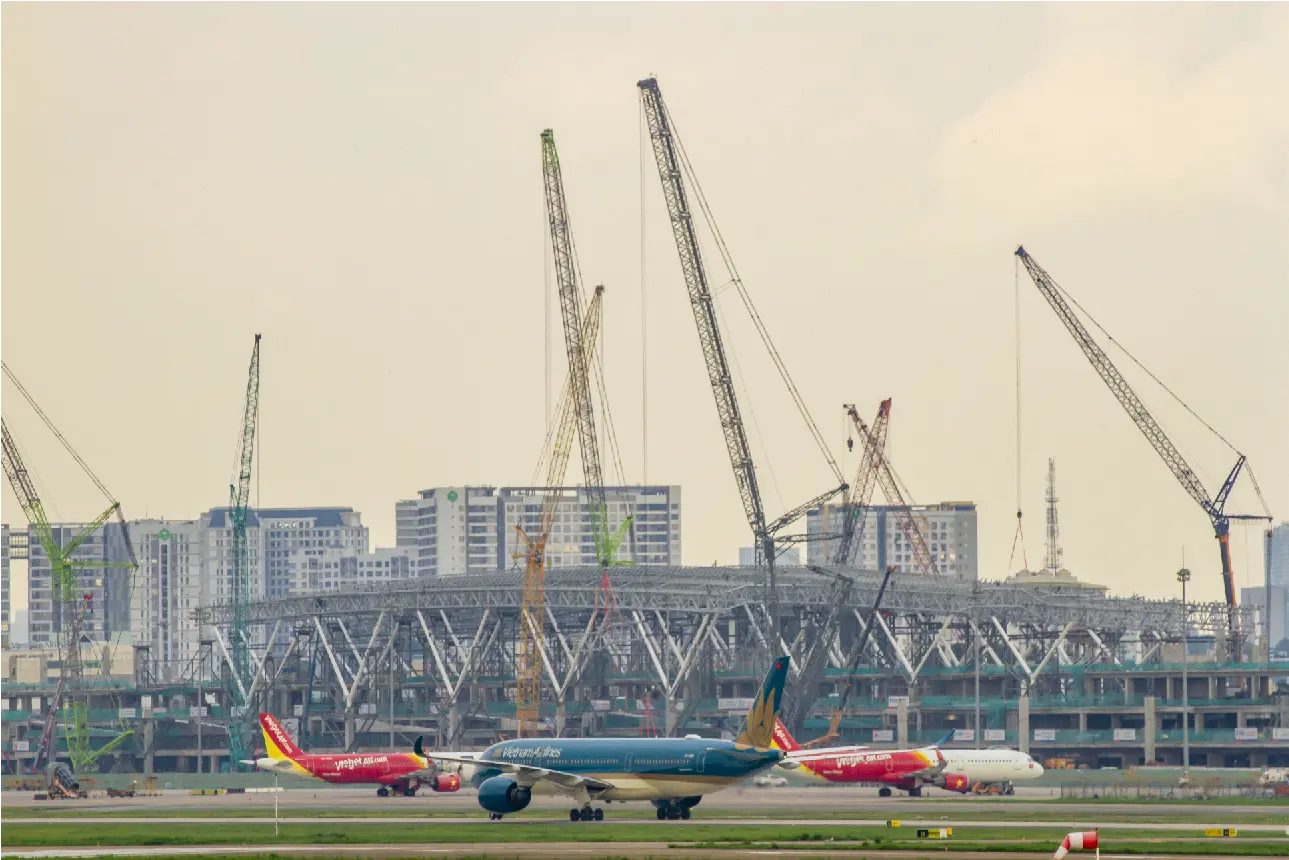
Second, the building keeps working. Most airport construction happens next to, above, or inside a facility that keeps processing passengers and aircraft. A fix that would be routine on a closed site becomes a phased intervention around live gates, active baggage lines, and security checkpoints.
Third, the requirements are layered. Aerodrome design rules, aviation security rules, national fire and accessibility codes, and in many countries critical infrastructure law all apply at once. An error is rarely just a geometry problem. It can also be a compliance problem that delays an approval or an opening.
What independent research says about rework
No independent study has published a rework rate specific to airport programs, so the honest starting point is the wider industry research that airport programs sit inside.
A study by Hwang and colleagues of 359 projects found mean field rework of 4.6 percent of construction cost in building projects and 5.7 percent in infrastructure projects, a group that explicitly includes airports. An earlier study by Love of 161 Australian building projects found that designers reported mean direct rework of 8.0 percent, contractors 5.8 percent, and project managers 4.3 percent. The spread matters as much as the numbers: each party measures rework from its own view of the project, and no single party holds the whole picture.
In the United Kingdom, the Get It Right Initiative estimates that error costs the construction sector up to 25 billion pounds a year. At the scale of the largest programs, McKinsey's 2015 analysis of billion-dollar-plus megaprojects in mining, oil and gas, and infrastructure found that 98 percent incurred cost overruns or delays, with an average cost increase of 80 percent of original value. Solibri's own estimate, drawn from its reports over several years, is that 5 to 12 percent of project value is at risk from rework.
None of these figures describes an airport directly. Together they describe an industry where a meaningful share of every budget goes into doing work twice, and where the share grows with complexity.
Copenhagen Airport: what one narrow corner cost
Copenhagen Airport runs around 100 projects a year, delivered by many design teams and contractors working for one owner. Rather than relying on manual coordination review, the airport's BIM team turns its asset managers' quality standards into Solibri rules and hands them to every project participant.
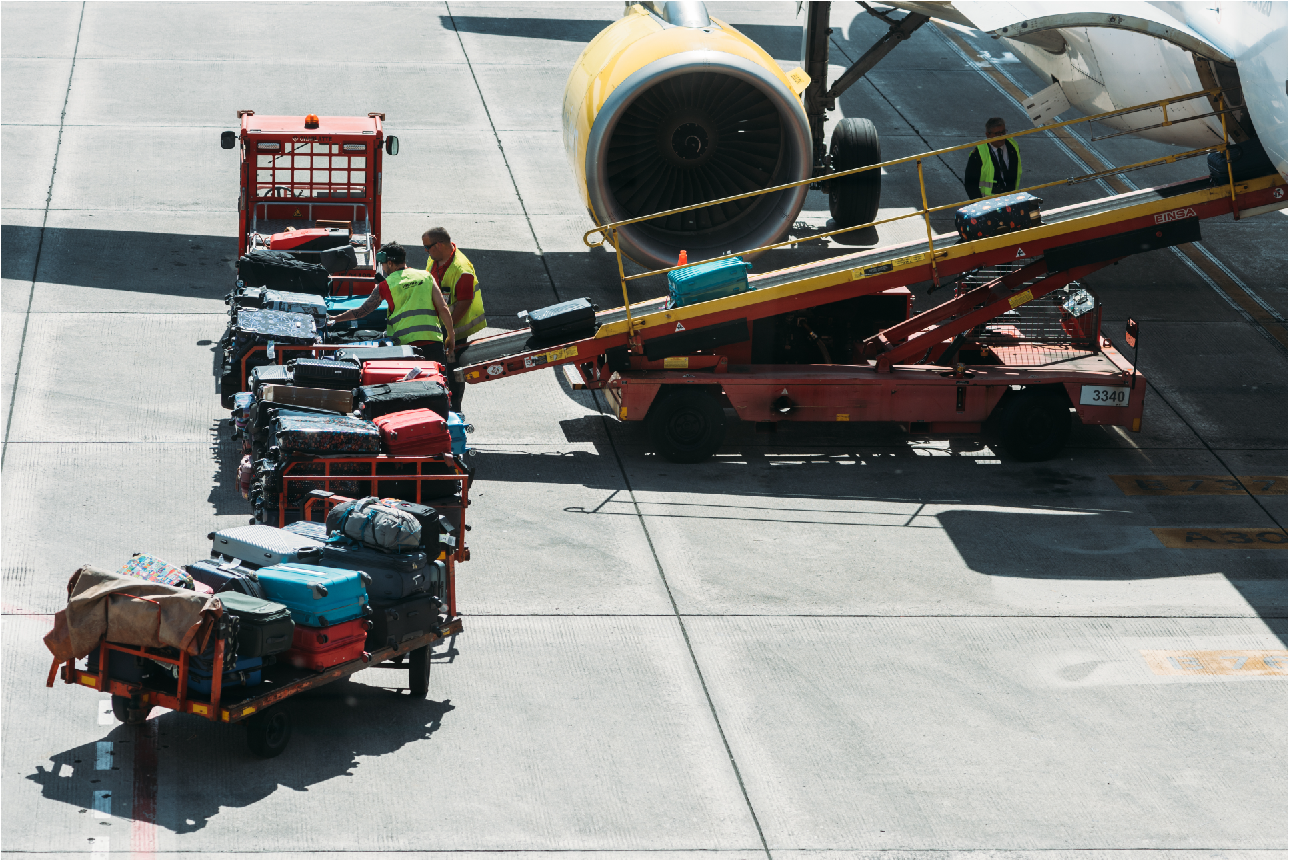
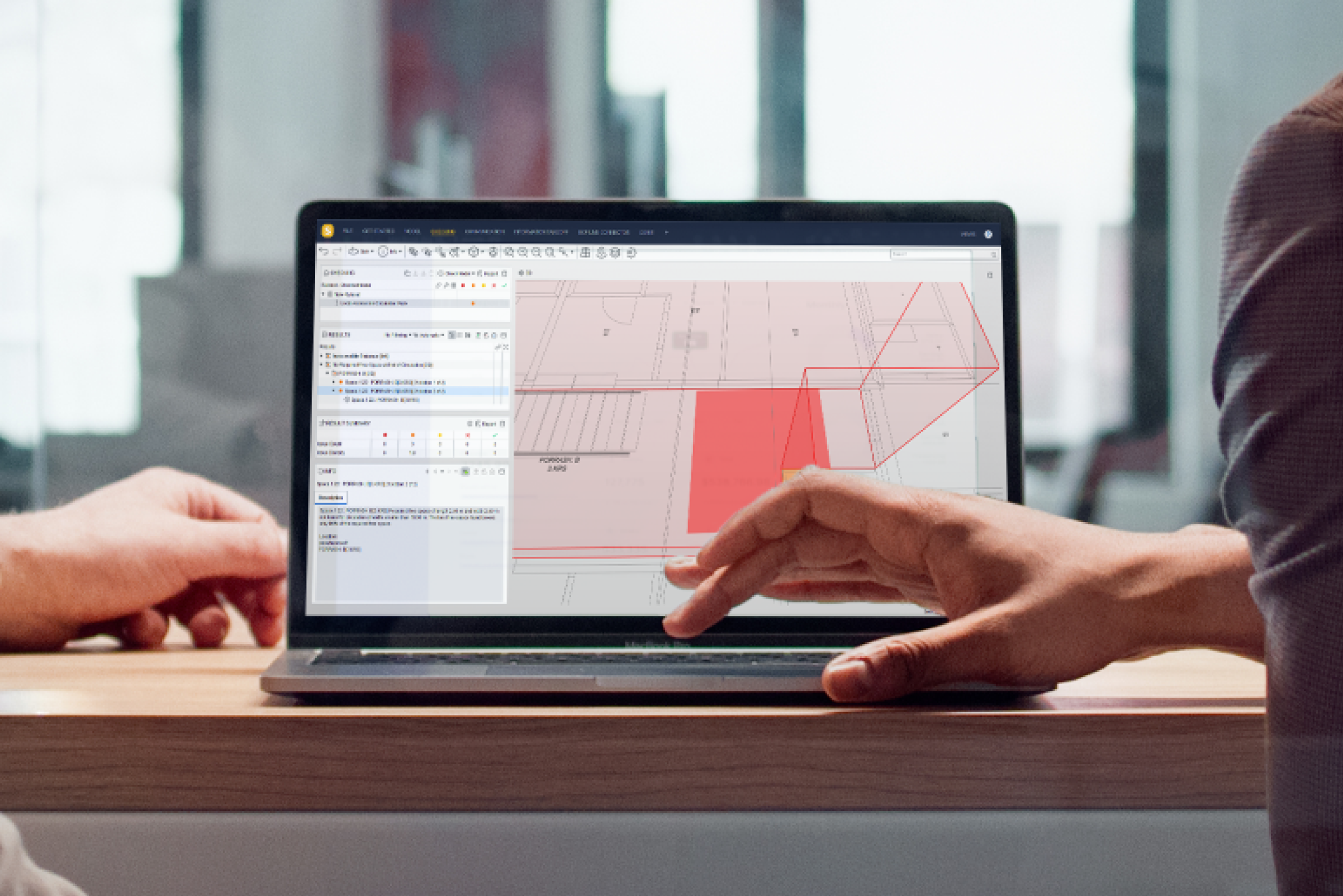
On one baggage handling project, the team needed to confirm that large equipment could reach a technical room through an elevator system. Model checking showed that access to the room was fine, and access to the elevator was fine, but the path between them was too narrow at one corner. The airport's asset managers could not have found the problem without model checking. The airport's engineering team calculated that catching it early saved more than 400,000 euros on the project.
The lesson is not the size of the number. It is where the error sat. Both ends of the route passed review. The failure was in between, at an interface no single discipline owned. Read the customer story.
The failures that never show up as a clash
Clash detection finds two objects occupying the same space. Many of the costliest airport errors are not collisions at all.
An accessible toilet can look correct in a 2D drawing and still miss a dimensional requirement. At Copenhagen Airport, one accessible toilet was found to be the wrong size, and checking the whole model showed every accessible toilet had the same problem. A manual spot check would have fixed one room and missed the pattern.
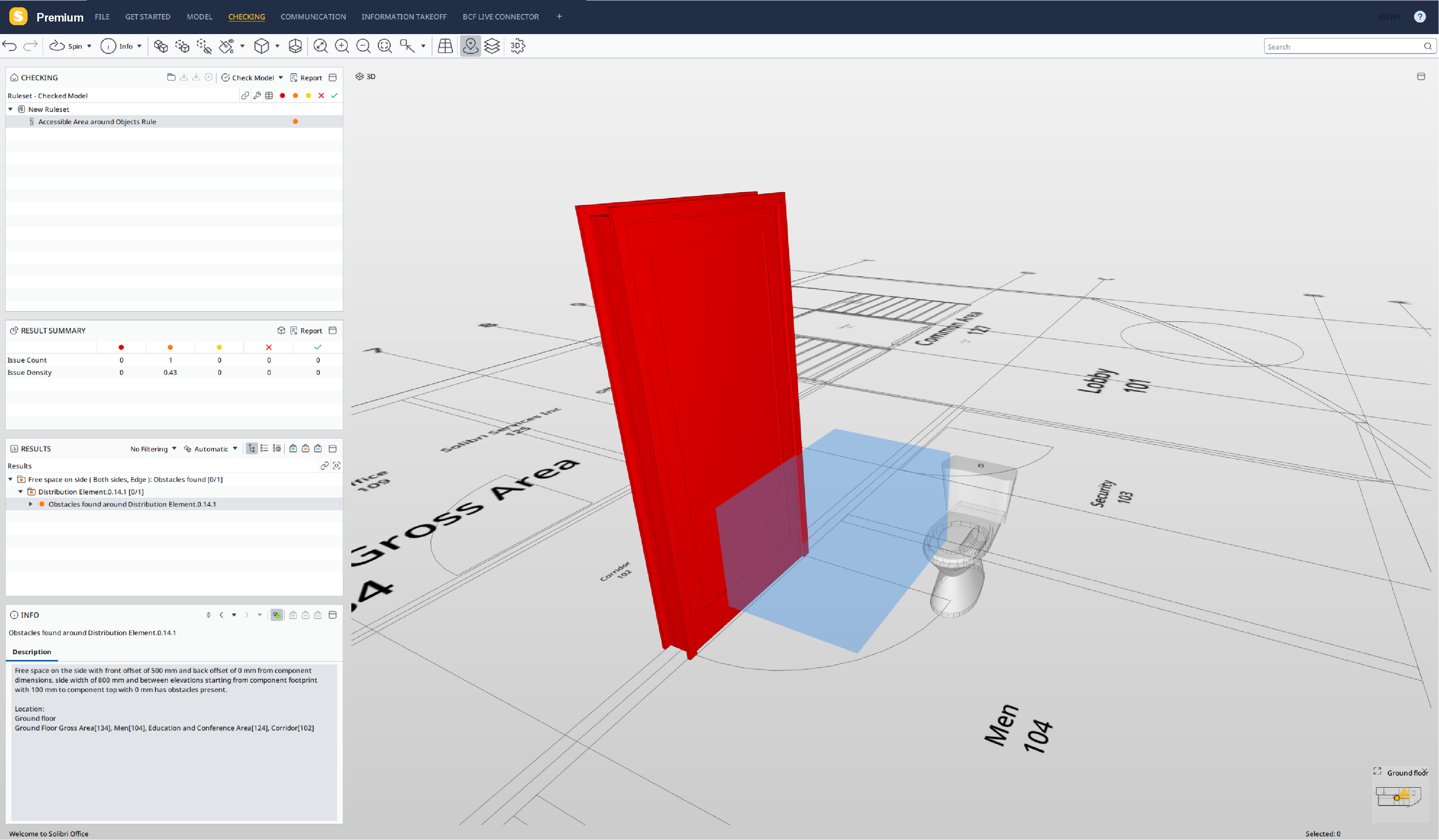
A fire compartment line can look intact in the structural model and be broken by an MEP penetration added late in coordination. A door can sit in exactly the right place and carry the wrong security classification. A model can satisfy every construction deliverable and still arrive at handover without the asset data the operator needs. None of these produces a red clash marker. All of them produce rework, or a compliance finding, if they are found late.
This is the distinction between clash detection and construction quality assurance. Clash detection checks geometry. Quality assurance checks the model against the requirements that actually apply: dimensions, classifications, data completeness, and the rules each space has to meet.
One standard, many contractors
The structural answer to airport rework is a standard that applies the same way to every contractor, every time the model changes. Copenhagen Airport shows how that works for a portfolio of around 100 projects a year. Oslo Airport's Terminal 2 expansion shows the same principle at program scale: the 120 contracts in the design and construct phases were required to submit BIM deliverables, and the client required every model to be handed over in both native and IFC formats. A requirement of that scale only works if every model, whichever team or authoring tool produced it, can be checked against the same rules.
A shared, rule based standard does three things a manual process cannot guarantee. It applies the same bar to the contractor who joins in year three as to the one who started in year one. It finds patterns, such as every accessible toilet sharing the same flaw, rather than single instances. And it records what was checked, against which rule version and which model revision, as a byproduct of the work.
Where the rules come from
An airport standard is assembled from several sources: the owner's own asset and maintenance requirements, aerodrome design rules based on ICAO Annex 14, aviation security rules, national fire and accessibility codes, and, where it applies, information management under ISO 19650. Article 2 in this series maps those requirements by topic and region. The practical point here is simpler. Every requirement that can be written as a pass or fail check can be checked automatically, and every requirement left as a description depends on a reviewer interpreting it the same way every time.
Questions to ask about your own program
Which interfaces between contracts have a named owner and their own check? Are clearance requirements from equipment suppliers written into the model requirements, or held in someone's head? When a requirement changes, how quickly does every contractor see the new version? And if an authority or the asset owner asked today what was checked on a given model revision, could your team produce the record?
The Airport BIM Coordination and Compliance Checklist turns these questions into a working tool, with a confirmation level for every item and a note on what happens when an item cannot be confirmed.
Airport BIM Coordination Checklist
This site is protected by reCAPTCHA.
The cost of an error depends on when it is found. Moving discovery from the job site to the model is the difference between a rule change and a rebuild, whether a program runs 100 projects a year or one terminal expansion inside a live airport.
Frequently asked questions
-
The cost varies by project and how rework is measured. In a study of 359 construction projects, mean field rework accounted for 4.6% of construction costs on building projects and 5.7% on infrastructure projects. These are industry figures, not airport-specific estimates. Source: The Impact of Rework on Construction
-
Airport projects bring together multiple disciplines and specialist systems, often while the facility remains operational. Fixing an issue on site can require work to be phased around active gates, baggage systems, or security areas, adding complexity to the correction.
-
BIM model checking identifies potential issues against project requirements before construction. Beyond detecting clashes, rule-based checks can reveal clearance problems, incorrect classifications, and missing data, giving teams an opportunity to resolve them earlier.