Seven decisions that shaped the delivery of the Zoetermeer wellness complex
How Pellikaan uses digitalization to maintain quality and control
Project at a glance
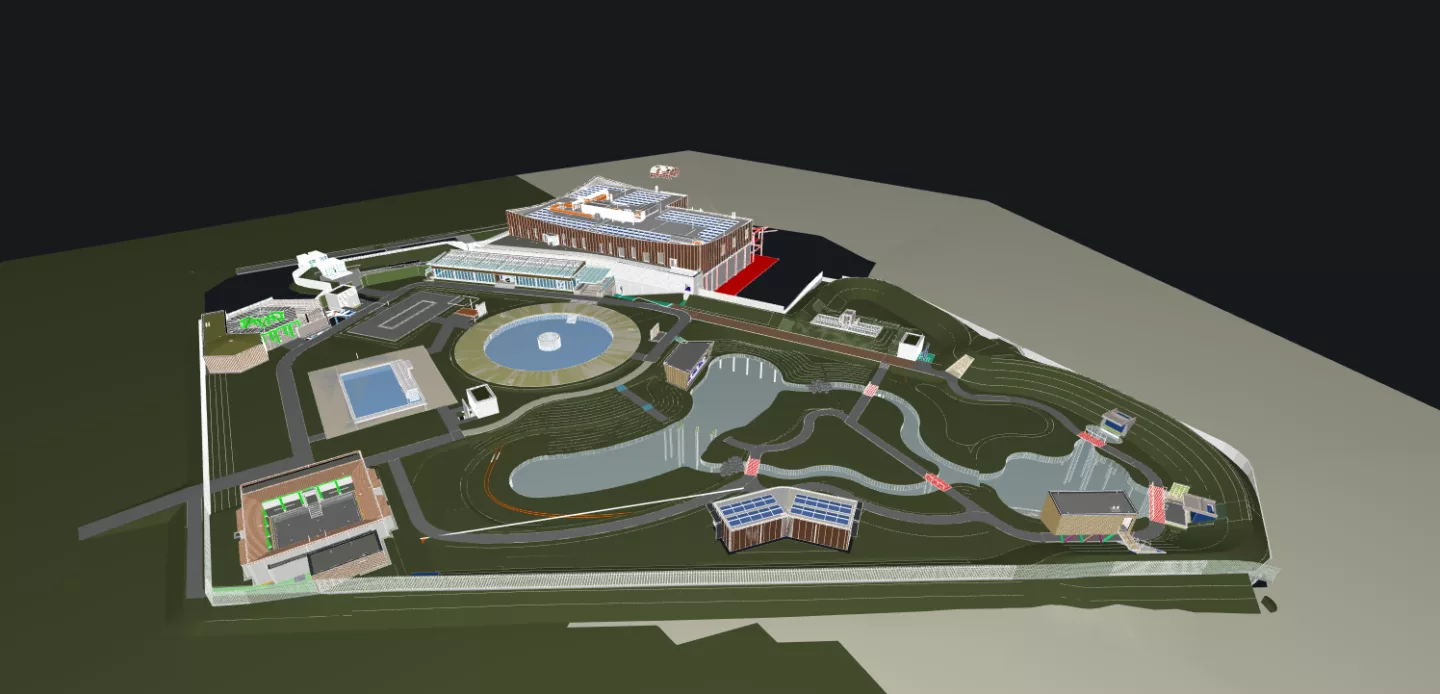
Site: 2.5 hectares
Main building: 60 × 60 m, 3 stories, approx. 9,500 m²
Pavilions: from pools and saunas to relaxation areas
Project scope: main building + 16 pavilions + smaller structures
Main building zoning: 10 zones
Completion: 1 April 2026
Digitalization with craftsmanship
Construction is digitalizing rapidly, but maintaining control over information, quality and collaboration is becoming increasingly complex. Models are growing, deadlines are tightening, and teams are working across borders. In this environment, managing changes, costs and risks is critical.
Pellikaan is delivering one of the largest and most comprehensive wellness complexes in the Netherlands, Zoetermeer. On a 2.5-hectare site, a world of saunas, pools and relaxation spaces is taking shape, connected by a 9,500-square-metre main building. The ambition is clear: deliver top quality without losing control.
"Quality before time," says Joris van den Braak, Digital Strategy Manager at Pellikaan. "That means making decisions based on insight, not assumptions."
The project shows how technology, organization and data come together in practice. Seven decisions proved decisive.
1. Choosing quality before time
From day one, quality was defined as a shared principle between client, designers and builders. Not as an abstract ambition, but as a guiding agreement throughout the project.
This resulted in a three-year construction timeline and the space to make deliberate choices at every stage. Design and execution continuously informed each other, with the goal of identifying deviations as early as possible and preventing late‑stage rework.
"When you're aiming for this level of finish, you can't move in a straight line from A to B," says project coordinator Jeroen Michielsen. "You need to keep adjusting, and that only works if your organization is structured for it."

2. Segmenting the project into 16 subprojects
The wellness complex consists of a main building and sixteen pavilions, each with its own structure, finishes and installations. Instead of working in one all-encompassing project model, Pellikaan chose to split the work into sixteen separate subprojects, each with its own team, schedule and site access.
"If you put everything into one model, it's never finished," says Van den Braak. "By segmenting, you make the project manageable. You see deviations sooner and can adjust without bringing the entire project to a halt."
This approach enabled parallel workflows and prevented changes in one zone from immediately impacting others.
3. Zoning and a fixed weekly cadence
Within the main building, complexity was further reduced by dividing the work into ten zones aligned with the construction sequence. Each zone had its own models, drawings and schedules.
This created a consistent rhythm:
- Weekly model updates
- Structured coordination between design and construction teams
- Immediate follow-up on open issues
"We learned that one week is the perfect cadence," says Michielsen. "Long enough to make progress, short enough to stay in control.”
Weekly model reviews brought calm to the process. Everyone worked from the same information, discussed clash detection results and made decisions based on current insights. Issues stayed small, and late-stage correction rounds were avoided.
4. Accelerating insight with ITO data
With hundreds of models and weekly updates, understanding change is essential. Instead of comparing versions manually, Pellikaan uses Information Takeoff (ITO) in Solibri to instantly identify differences between model versions.
Each update clearly shows what has changed: more steel, less concrete, modified installations. These differences are immediately translated into quantities.
"Sometimes we could see with a single click that ten tons of steel had been added," says Michielsen. "That immediately tells you what it means for cost and planning. It avoids discussion and speeds up decision-making."
5. Using 3D scenarios for site and logistics planning
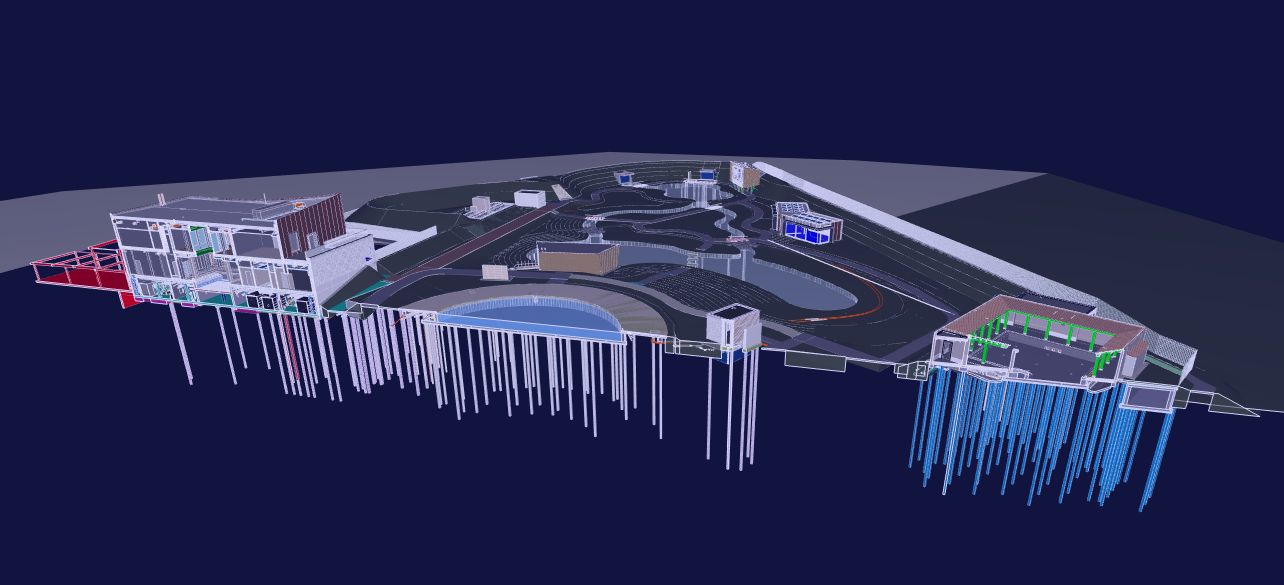
The Zoetermeer site includes elevation changes, fill areas and varying ground conditions. To manage this complexity, Pellikaan developed multiple 3D scenarios for earthworks and site logistics.
What remains hidden in 2D became instantly visible in 3D: where excavation was needed, where filling was more efficient, and where double handling could be avoided. Based on these scenarios, the team selected the most efficient execution strategy, with minimal disruption and transport.
"Earthworks are logistics," says Michielsen. "You only really see the impact when you view it in 3D."
6. One shared language across four countries
Pellikaan operates in the Netherlands, Belgium, Germany and the United Kingdom. Each country has its own standards, but the ambition is to structure information in a consistent way across all regions.
To achieve this, Pellikaan is developing a cross-country classification system with recognizable codes per building element, usable from tender to handover. In the Netherlands, it aligns with NL/SfB, while in other countries it connects to local conventions.
"It's not about the code itself," explains Van den Braak. "It's about everyone speaking the same language. That makes data transferable and prevents interpretation differences."
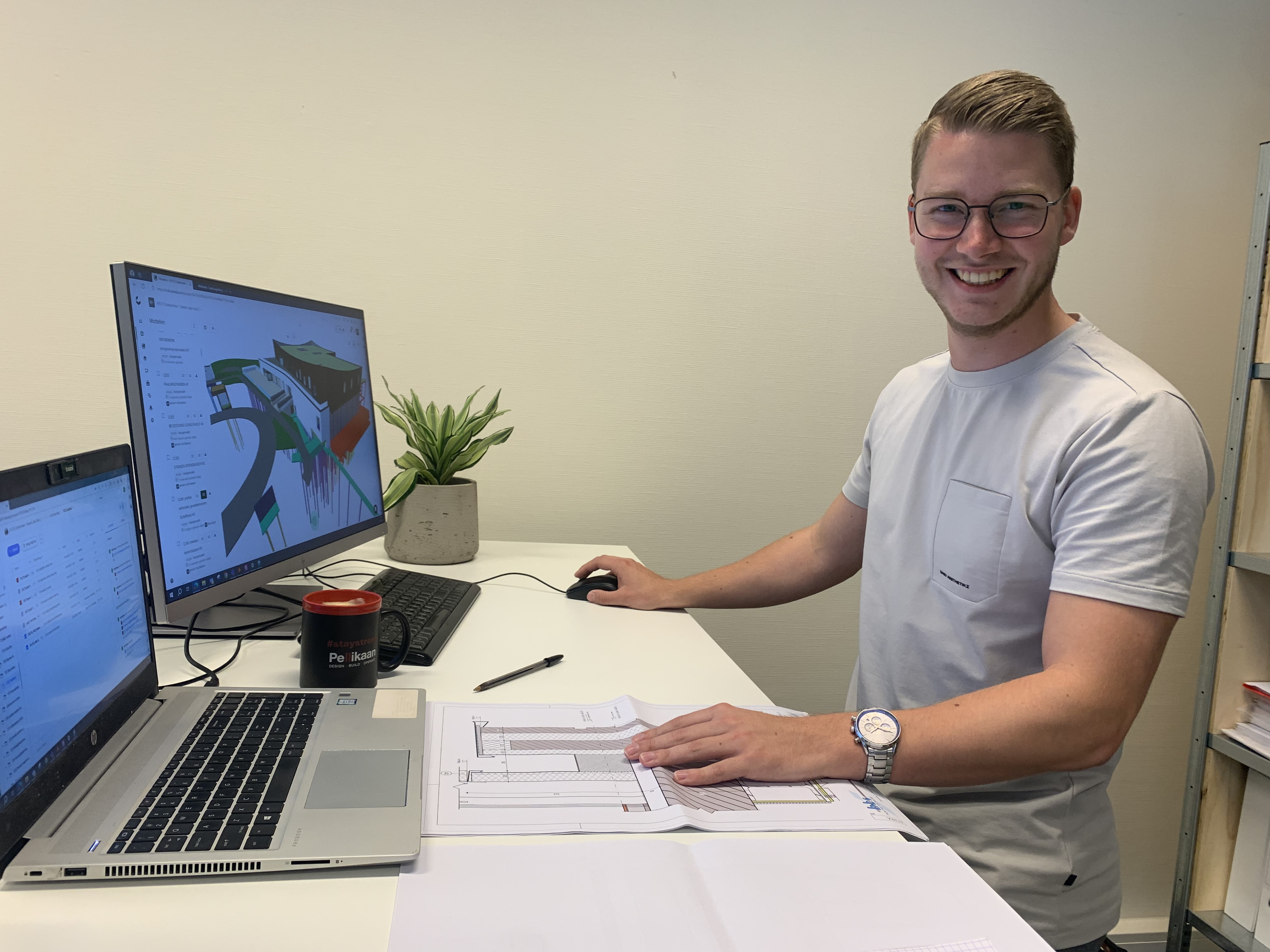
7. Putting people first and keeping digitalization practical
Digitalization only works if people can work with it. Pellikaan therefore deliberately chose a pragmatic approach, with clear templates, reusable rulesets and understandable standards. Together with training partner Based, learning happens in practice, directly at project level.
"We want people to have the model open while they're working," says Van den Braak. "Once you experience how it helps, it naturally becomes part of your workflow."
Results: control, speed and confidence
The combination of structure, a fixed cadence and data-driven model validation leads to tangible results:
- Faster decision‑making: From days to minutes through model comparisons and ITO‑based change detection.
- Better collaboration: One rhythm, one shared model view, one shared reality.
- Lower risk: Deviations identified early, before they reach the site.
- More efficient delivery: Parallel subprojects without mutual disruption.
- Predictable quality: “Quality before time,” supported by structured data and rule‑based checks.
The opening of the wellness complex is scheduled for 1 April 2026. For Pellikaan, the Zoetermeer project serves as a blueprint for future projects, both nationally and internationally.
"Digitalization is not a goal in itself," concludes Van den Braak. "It's a way to build better. The real value lies in predictability, collaboration and trust in your information."
About Pellikaan
Pellikaan Bouwbedrijf is a family-owned construction company operating in the Netherlands, Belgium, Germany and the United Kingdom. It combines traditional craftsmanship with modern digital workflows to deliver projects that are more efficient, transparent and predictable https://pellikaan.com/en/
About Solibri
Solibri, a Nemetschek Company, is the global leader in model checking and digital quality assurance for the construction industry. Our solutions help project teams prevent costly errors, ensure compliance, and deliver high-quality buildings. Trusted in over 100 countries, Solibri sets the standard for BIM-based design validation and coordination. Learn more at www.solibri.com.